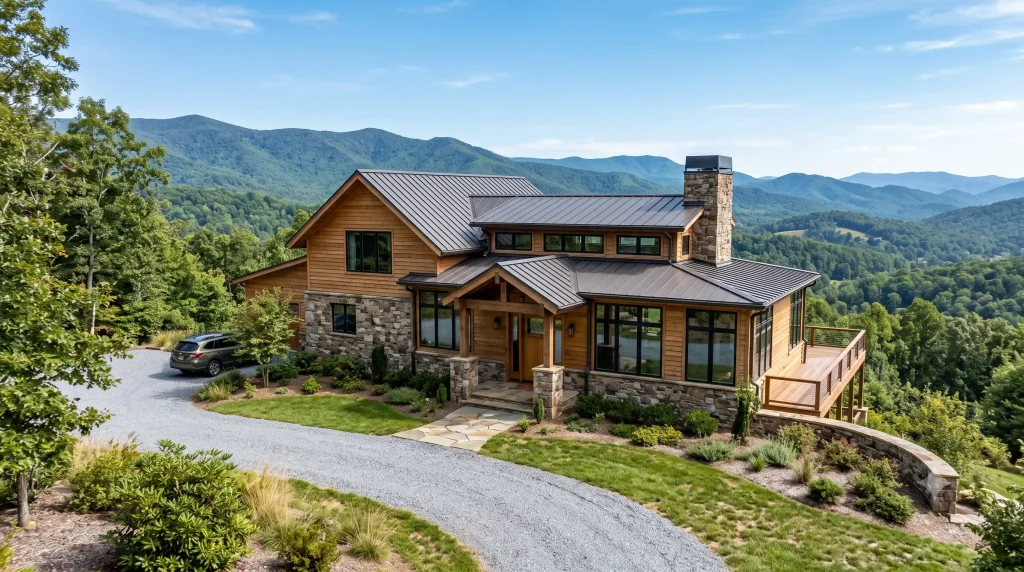
Western North Carolina is one of the most beautiful — and most demanding — places in the country to own a home. Between Asheville’s rolling foothills, humid Hendersonville summers, Blue Ridge freeze-thaw cycles, and rainfall that soaks the mountains from spring through fall, homes here face conditions that generic remodeling advice simply doesn’t address.
If you’re planning a kitchen renovation, finishing a basement, building a custom mountain home, or trying to find a contractor you can actually trust in Buncombe, Henderson, Madison, or Haywood County, you need guidance built specifically for this region. That’s what this guide delivers.
Inside, you’ll find a complete breakdown of the ten most important home improvement categories in WNC — kitchen remodeling, bathroom remodeling, basement finishing, home repair, structural repair, plumbing, deck construction, waterproofing, custom home building, and choosing a contractor. Every section includes real cost ranges, realistic timelines, step-by-step processes, comparison tables, and regional insights drawn from years of building and renovating high-end home renovations across the mountains.
At Black Rabbit Construction, we’re a design-build firm based in Weaverville, NC, serving homeowners throughout the areas we serve across Western NC — including Asheville, Black Mountain, Hendersonville, and Fairview. Everything below reflects how projects actually run here, not how they run in a national cost calculator.
What Is Home Remodeling and Why Does Western North Carolina Need It?
Home remodeling is the process of restructuring, redesigning, or upgrading an existing home to improve its functionality, aesthetics, energy efficiency, or value. In Western North Carolina, remodeling isn’t just a lifestyle upgrade — it’s often a necessity driven by climate, home age, and shifting market demand.
Understanding Home Remodeling in Western NC’s Unique Climate
Many homeowners confuse remodeling with renovation. Renovation focuses on restoring or updating what’s already there — new paint, refinished floors, updated cabinets. Remodeling changes the structure, layout, or function of a space: knocking down a wall, expanding a bathroom, converting a basement into livable square footage.
Western North Carolina’s climate makes region-specific approaches essential. The area experiences:
- High humidity — often 60–80% during warmer months
- Heavy annual rainfall — frequently 45–70+ inches depending on elevation, according to regional data from the NOAA National Centers for Environmental Information headquartered right here in Asheville
- Significant elevation changes that redirect groundwater toward foundations
- Freeze-thaw winter cycles that stress framing, masonry, and plumbing
- Older housing stock — especially in Asheville and surrounding towns — with outdated mechanical systems
Remodeling with these factors in mind delivers real benefits: higher property value, improved energy efficiency, better indoor air quality, moisture protection, and long-term structural stability.
How Home Remodeling Adds Value to Your Western NC Property
The Asheville metro area remains one of the fastest-appreciating housing markets in the Southeast. Well-executed remodeling projects in this region typically return:
- Kitchen remodels: 50–70% ROI
- Bathroom remodels: 50–70% ROI
- Basement finishing: 70–80% ROI
- Custom homes: 80–100%+ value at build completion
- Waterproofing: exceptionally high indirect ROI by preventing catastrophic damage
Beyond resale value, remodeling improves daily living — better flow, lower utility bills, and protection against the moisture problems that quietly destroy WNC homes from the inside out.
Complete Guide to Home Remodeling in Western North Carolina — All 10 Essential Categories
Below is a detailed breakdown of every major remodeling and home improvement category Western NC homeowners need to understand before starting a project.
1. Kitchen Remodeling in Western North Carolina
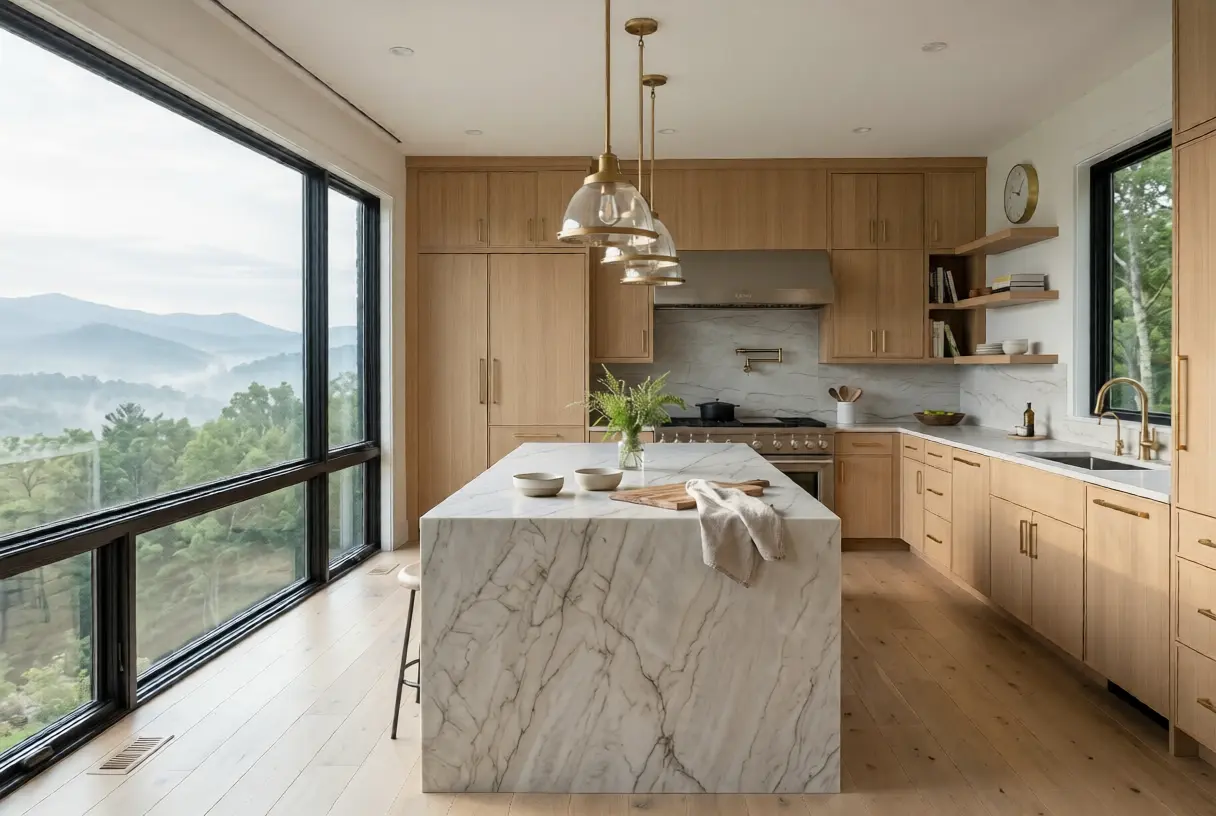
The kitchen is the single most valuable room to remodel — and in Western NC, it’s also one of the most demanding due to humidity, ventilation needs, and material durability requirements.
Kitchen Remodeling Essentials for Western NC Homes
Kitchens deliver the highest ROI of any remodel because they influence both buyer perception and daily livability. But WNC-specific challenges must be addressed from day one:
- Moisture control to prevent cabinet warping and hidden mold behind backsplashes
- Durable countertop surfaces — quartz, granite, or properly sealed soapstone
- Serious ventilation — high-CFM range hoods vented outdoors, never recirculating
- Moisture-resistant flooring — luxury vinyl plank, porcelain tile, or engineered hardwood
Our kitchen renovation services are built around these realities from the first design meeting.
Kitchen Remodeling Design Trends for 2025–2026
Modern WNC homeowners are gravitating toward designs that blend function with mountain aesthetics:
- Mountain modern kitchens with clean lines, natural wood accents, matte black hardware
- Rustic farmhouse layouts with apron sinks, shaker cabinets, butcher block accents
- Open-concept flow connecting kitchen, living, and dining
- Two-tone cabinetry — light uppers, darker or wood-tone lowers
- Smart, ENERGY STAR-rated appliances
- Oversized islands with prep sinks and seating for 3–5
If you’re in the design phase, our breakdowns of the best luxury kitchen layouts for mountain homes, choosing countertops for mountain kitchens, and 2026 cabinetry trends will save you weeks of second-guessing.
Step-by-Step Kitchen Remodeling Process
- Assessment and planning — evaluate the existing layout, identify pain points, define goals
- Design consultation with a local WNC contractor who understands climate-driven material selection
- Material selection prioritizing durability, moisture resistance, and finish quality
- Budget breakdown including labor, materials, permits, and a 10–15% contingency
- Timeline setting — typically 4–8 weeks for full remodels
- Demolition and installation of cabinets, countertops, appliances, and finishes
- Final walk-through, punch list, and quality inspection
Kitchen Remodeling Cost Breakdown
| Component | Budget Range | Typical Duration | Notes |
|---|---|---|---|
| Cabinets | $3,000–$15,000 | 2–4 weeks | Custom vs. semi-custom options |
| Countertops | $2,000–$8,000 | 1–2 weeks | Quartz ideal for WNC humidity |
| Flooring | $1,500–$5,000 | 1 week | Water-resistant strongly recommended |
| Appliances | $2,000–$10,000 | 2–3 days | Energy-efficient models preferred |
| Backsplash/Tile | $1,000–$3,000 | 3–5 days | Moisture-resistant materials |
| Labor | $3,000–$8,000 | Variable | Depends on contractor experience |
| Total Average | $12,500–$49,000 | 4–8 weeks | Depends on scope |
For a deeper regional pricing breakdown, see our guide to kitchen renovation cost in Weaverville, NC, or view a real before-and-after high-end kitchen transformation.
Common Kitchen Remodeling Mistakes to Avoid in Western NC
- Ignoring humidity and moisture control, leading to warped cabinets and hidden mold
- Poor ventilation — undersized or recirculating hoods trap grease and moisture indoors
- Inadequate electrical planning for modern appliance loads and induction ranges
- Hiring non-local contractors unfamiliar with WNC codes and inspection sequencing
2. Bathroom Remodeling in Western North Carolina
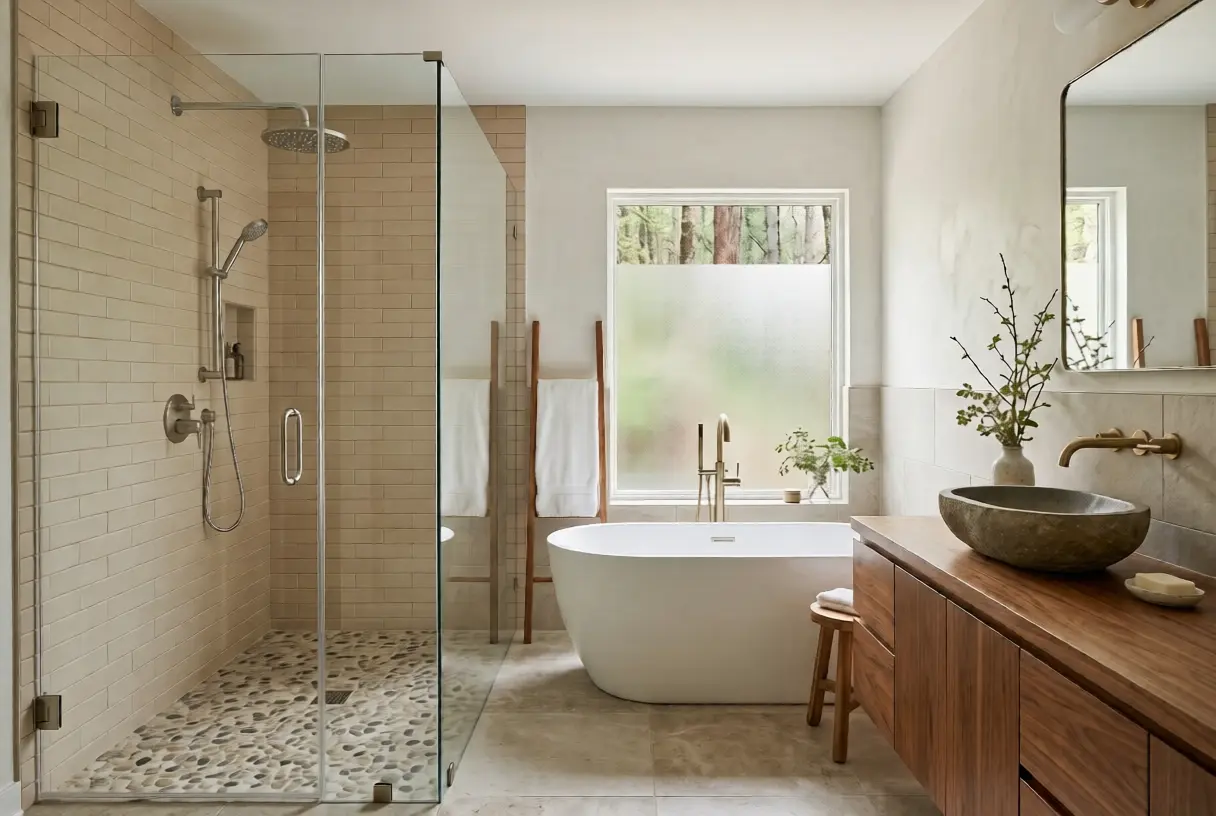
Bathrooms are smaller than kitchens, but in Western NC they carry outsized importance because of constant moisture exposure and mold risk.
Why Bathroom Remodeling Is Critical in Western NC
WNC bathrooms face a triple threat: high indoor humidity, aging plumbing, and chronically inadequate ventilation. Left unaddressed, these conditions produce:
- Mold and mildew behind walls and beneath flooring
- Rotting subfloors and wall studs
- Structural deterioration in older homes
- Poor indoor air quality — a documented health concern per the EPA’s mold and moisture guidance
Explore our full approach to bathroom renovation built for mountain-climate performance.
Modern Bathroom Remodeling Designs for Western NC Climate
Effective bathroom design in WNC prioritizes:
- Exhaust ventilation — minimum 80–100 CFM per bathroom, ducted to the exterior
- Water-resistant materials — porcelain tile, cement backer board, sealed grout
- Space optimization — corner vanities, floating cabinets, walk-in showers
- Curbless showers for accessibility and modern appeal
- Heated floors for mountain winters — we break down whether heated bathroom floors are worth it
For inspiration, review current spa bathroom trends for Weaverville custom homes.
Step-by-Step Bathroom Remodeling Guide
- Moisture and mold assessment — inspect walls, subfloors, and existing damage
- Ventilation evaluation and upgrade where needed
- Plumbing and electrical upgrades, especially in pre-1990 homes
- Material selection — waterproof, mold-resistant, warranty-backed
- Installation sequence — plumbing, framing, waterproofing membrane, tile, fixtures
- Testing and QA — leak tests, ventilation verification, sealant curing
Bathroom Remodeling Cost & Timeline Comparison
| Project Type | Investment | Timeframe | Complexity |
|---|---|---|---|
| Half Bath Refresh | $3,000–$8,000 | 2–3 weeks | Low |
| Full Master Bath | $10,000–$30,000 | 4–6 weeks | High |
| Multiple Bathroom Upgrade | $20,000–$60,000 | 8–12 weeks | Very High |
| Luxury Master Suite | $30,000–$75,000+ | 10–16 weeks | Very High |
See detailed local pricing in our bathroom remodel cost guide for high-end Weaverville homes.
Bathroom Remodeling Materials That Work Best in Western NC
- Mold-resistant drywall (DensArmor, Purple XP) in all wet zones
- Porcelain tile — denser and less absorbent than ceramic
- Luxury vinyl plank flooring — fully waterproof and cost-effective
- Mildew-resistant paint with epoxy-based sealants
- Cement backer board behind every shower and tub tile installation
3. Basement Remodeling in Western North Carolina
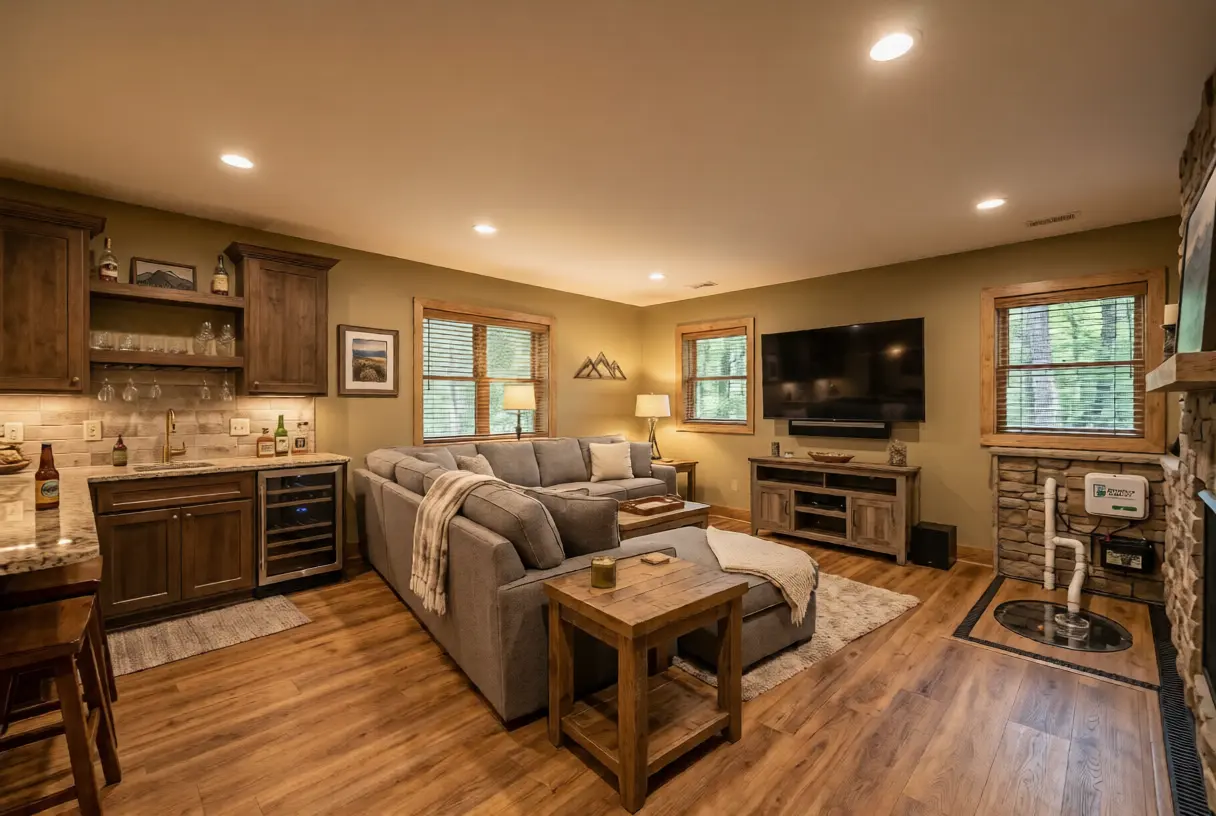
Basement remodeling can add hundreds of square feet of livable space — but only when moisture and drainage are solved first.
Basement Remodeling Challenges Unique to Western NC
Mountain terrain naturally channels water toward foundations. Common WNC basement issues include:
- Water infiltration through walls and floor slabs
- Foundation settling in older homes
- Chronic humidity and musty odors
- Radon exposure — parts of Western NC have elevated levels; see the EPA’s radon resources and the NC Radon Program
- Poor natural ventilation and limited egress
Basement Remodeling: Converting Space Into Functional Living Areas
Popular WNC basement conversions include:
- Home offices and studios
- Guest suites and in-law apartments
- Home gyms and wellness rooms
- Media and recreation rooms
- Short-term rental units (a strong play in the Asheville market)
Egress windows are required by NC code for any basement bedroom, and finished areas must meet ceiling height and ventilation requirements. Larger conversions often fall under our full interior reconstruction scope.
Step-by-Step Basement Remodeling Process for Western NC Homes
- Water damage inspection and full moisture assessment
- Grading and drainage evaluation around the exterior foundation
- Moisture barrier installation on floors and walls
- Framing and insulation using mold-resistant materials
- Electrical, plumbing, and HVAC planning
- Finishing — drywall, flooring, trim, paint
- Final inspections for code compliance
Flooring choice matters more below grade than anywhere else — see our guide to the best flooring materials for mountain homes.
Basement Remodeling Investment Guide
| Approach | Cost Range | ROI | Timeline |
|---|---|---|---|
| Unfinished Storage | $2,000–$5,000 | Low | N/A |
| Semi-Finished (Partial) | $8,000–$20,000 | Moderate | 4–6 weeks |
| Fully Finished | $20,000–$50,000+ | High (70–80%) | 8–12 weeks |
| Luxury Basement | $50,000–$100,000+ | High | 12–16 weeks |
Waterproofing & Moisture Control in Basement Remodels
Never finish a WNC basement without waterproofing first. Non-negotiables:
- Interior or exterior waterproofing membranes
- Sump pump systems — effectively standard in mountain basements
- Vapor barriers on walls and slabs
- Dehumidifiers sized to actual square footage
- Annual maintenance on pumps, seals, and drainage lines
4. Home Repair in Western North Carolina
Beyond major remodels, consistent home repair keeps WNC properties healthy year after year.
Essential Home Repairs for Western NC Properties
The most common categories:
- Weather damage from heavy rain, wind, and ice storms
- Foundation settling in older mountain homes
- Roof repairs from UV exposure, moss growth, and wind uplift
- Siding and trim damage from moisture and temperature swings
Envelope-related failures are best addressed comprehensively — see our exterior envelope upgrades service and our breakdown of exterior envelope upgrades that improve efficiency.
Seasonal Home Repairs Specific to Western North Carolina
- Spring: Roof inspection, snowmelt damage repair, gutter clearing
- Summer: Exterior painting, deck maintenance, HVAC servicing
- Fall: Gutter cleaning, chimney inspection, winterization
- Winter: Ice dam prevention, pipe insulation, freeze damage repair
Common Home Repair Issues in Western NC
| Issue | Cause | Urgency | Typical Cost |
|---|---|---|---|
| Water Infiltration | Humidity, poor drainage | High | $500–$5,000+ |
| Roof Leaks | Weather exposure, age | High | $300–$2,000+ |
| Foundation Cracks | Settlement, moisture | High | $500–$3,000+ |
| Rotting Wood | Moisture damage | High | $400–$2,000+ |
| Mold Growth | Humidity, poor ventilation | High | $500–$10,000+ |
| Damaged Siding | Weather, age | Moderate | $300–$1,500+ |
| Deck Rot | Weather exposure | Moderate | $500–$3,000+ |
| HVAC Issues | Age, maintenance neglect | Moderate | $300–$2,000+ |
Step-by-Step Home Repair Process
- Identify the problem through inspection
- Document damage with detailed, dated photos
- Obtain 2–3 written repair estimates
- Prioritize urgent (structural, water) over cosmetic
- Schedule work with a licensed WNC contractor
- Oversee the work and verify quality at each stage
- Collect warranty documentation and receipts
5. Structural Repairs in Western North Carolina
Structural repairs are among the most serious home projects — and WNC’s terrain and older housing stock make them unusually common.
Understanding Structural Repairs for Western NC Homes
Structural issues affect load-bearing systems: foundation, framing, joists, beams, and bearing walls. Unlike cosmetic damage, these problems compromise safety. WNC homes are especially vulnerable because of:
- Sloped mountain terrain causing differential settlement
- Older homes built with dated methods and undersized framing
- Freeze-thaw cycles combined with persistent moisture
If you see horizontal foundation cracks, bowing basement walls, sagging floors, or doors that suddenly won’t latch, bring in a licensed structural engineer — not just a handyman. Our article on structural issues older Weaverville homes hide behind the walls covers the warning signs in detail.
Common Structural Issues in Western North Carolina Homes
- Foundation settling, bowing, and cracking
- Joist and beam rot from crawl space moisture
- Load-bearing wall stress and undersized headers
- Roof rafter and truss deterioration
Structural work frequently overlaps with layout changes — see our home additions & structural remodeling service and our guide on when you should remove a load-bearing wall.
Step-by-Step Structural Repair Process
- Professional structural inspection by a licensed engineer
- Problem diagnosis and formal documentation
- Engineered repair design and specifications
- Permit acquisition — required for nearly all structural work
- Implementation by a licensed structural contractor
- Inspection and engineer certification
- Insurance and warranty documentation
Structural Repair Investment & Timeline
| Problem Type | Severity | Cost Range | Timeline | Permits |
|---|---|---|---|---|
| Small Foundation Crack | Minor | $500–$2,000 | 1–2 weeks | Often no |
| Bowing/Cracking Basement Walls | Moderate | $3,000–$10,000 | 2–4 weeks | Yes |
| Sagging Floor/Joists | Major | $5,000–$20,000+ | 3–6 weeks | Yes |
| Load-Bearing Wall Issues | Critical | $10,000–$40,000+ | 6–12 weeks | Yes |
| Complete Foundation Repair | Critical | $15,000–$50,000+ | 8–16 weeks | Yes |
Structural Repair Materials & Methods
- Epoxy injection for hairline foundation cracks
- Carbon fiber straps for bowing block walls
- Steel or helical piers for foundation stabilization and lifting
- Sistered joists for sagging floor systems
- Beam replacement or augmentation for compromised members
- Wall bracing for lateral stability
6. Plumbing in Home Remodeling Projects (Western NC)
Every remodel involving water requires plumbing planning — and WNC’s water quality and freeze risk make those decisions especially consequential.
Plumbing Upgrades Essential for Western North Carolina Homes
- Hard water solutions — much of WNC’s water carries high mineral content
- Freeze-resistant plumbing — insulate all lines in exterior walls and crawl spaces
- Proper drainage design on sloped terrain to prevent backflow and slow drains
- Efficient fixtures to reduce load on wells and septic systems
For rural and private-land properties, plumbing planning starts even earlier — see our guides on septic planning for private land in NC and septic and well installation costs, plus our property infrastructure for private land service.
Plumbing System Updates During Remodeling
The key decision: full or partial replumbing?
- PEX piping — flexible, freeze-tolerant, cost-effective; increasingly the WNC standard
- Copper piping — durable and long-lived, but costly and more prone to freeze bursts
- Galvanized replacement — effectively mandatory in older homes for water quality and flow
All work should be performed by a contractor licensed through the NC Board of Examiners of Plumbing, Heating & Fire Sprinkler Contractors.
Step-by-Step Plumbing in Remodeling Projects
- Existing plumbing inspection and condition assessment
- New plumbing layout design
- Permit application and inspection scheduling
- Rough-in pipe installation
- Fixture installation
- Pressure and leak testing
- Final inspection and warranty documentation
Plumbing Project Costs & Components
| Component | Cost Range | Necessity | Notes |
|---|---|---|---|
| Replumbing Bathroom | $2,000–$6,000 | If upgrading | Depends on extent |
| Replumbing Kitchen | $1,500–$4,000 | If moving sink | Labor-intensive |
| Water Heater Upgrade | $1,200–$3,500 | Recommended | Tankless options available |
| Fixture Installation | $500–$2,000 | Variable | Premium fixtures cost more |
| Drain/Sewer Repair | $1,000–$5,000+ | If needed | May require excavation |
| Water Treatment System | $1,500–$4,000 | Optional | Recommended for hard water |
Plumbing Code & Compliance in Western North Carolina
All plumbing must meet the NC State Plumbing Code plus local county amendments — verify requirements through the NC Office of the State Fire Marshal. The most common violations we see: improper venting, incorrect drain slope, missing shut-off valves, and unpermitted fixture relocations. Never close walls before inspection sign-off.
7. Deck Construction in Western North Carolina
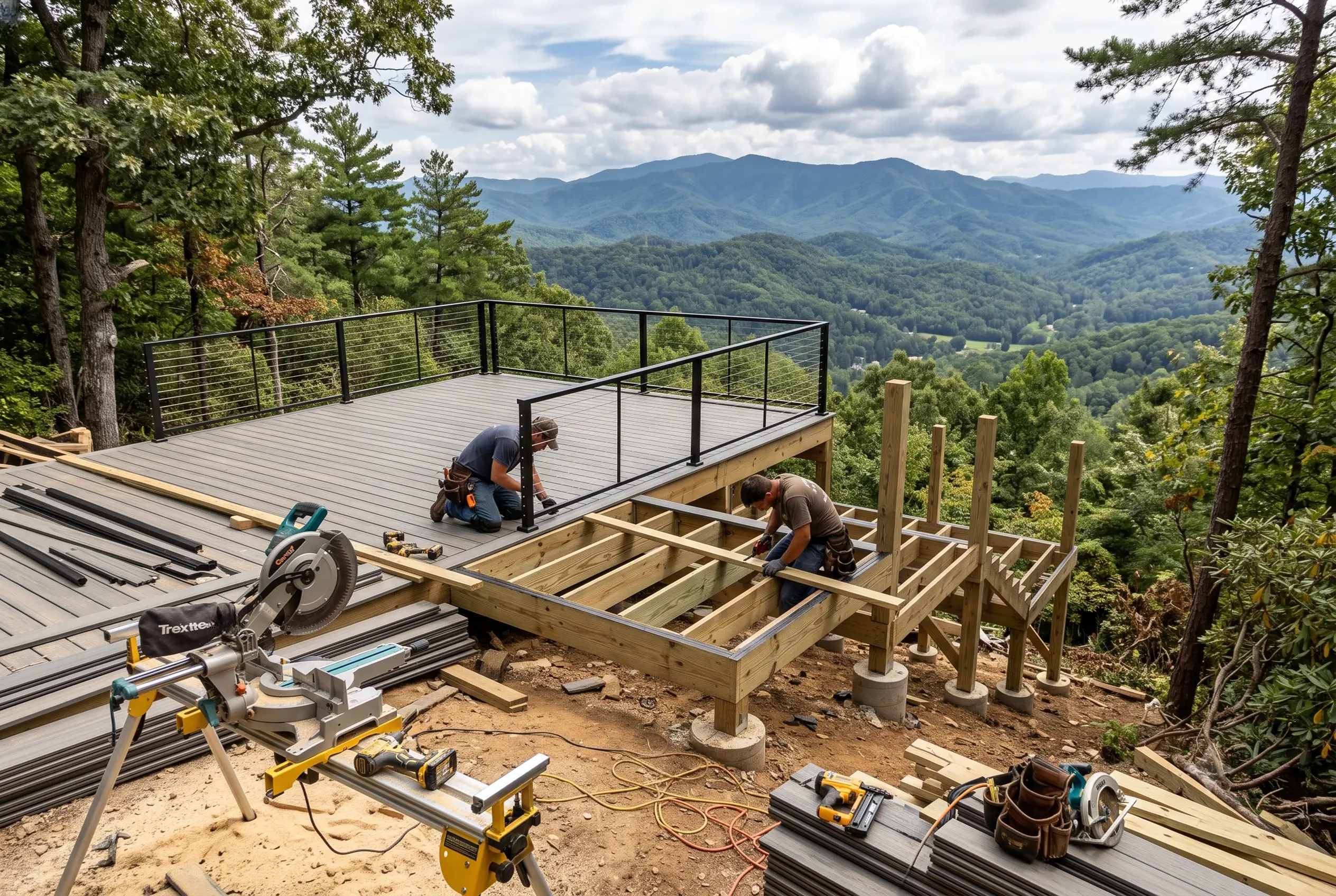
Decks are among the most popular WNC additions — few regions offer better views. But mountain climate demands smart material and framing choices.
Deck Construction Considerations for Western NC Climate
- Moisture-resistant materials to withstand humidity and heavy rainfall
- Snow load engineering for higher elevations
- Proper slope and drainage to prevent standing water
- Setback and zoning compliance with your county
- Properly flashed ledger boards — the #1 cause of deck-related water damage
Explore our decks, porches & retaining walls service and current luxury mountain deck design trends.
Deck Construction Materials: Comparison for Western NC
| Material | Cost/sq ft | Lifespan | Maintenance | Best For |
|---|---|---|---|---|
| Pressure-Treated Wood | $8–$15 | 15–20 years | High (sealing) | Budget-conscious |
| Cedar/Redwood | $12–$18 | 15–20 years | High (sealing) | Aesthetics |
| Composite Decking | $20–$35 | 25–30 years | Low | Low maintenance |
| Tropical Hardwood | $15–$25 | 20–25 years | Moderate | Premium look |
| PVC Decking | $25–$40 | 30+ years | Very low | Zero maintenance |
For covered structures, our guides to porch materials for the WNC climate and covered porch design for mountain estates go deeper.
Step-by-Step Deck Construction Process
- Site assessment and design planning
- Permit application and inspection scheduling
- Footing, foundation, and post installation
- Framing and structural support
- Decking material installation
- Railings and safety features
- Sealing or staining (wood only)
- Final inspection and approval
Deck Construction Cost Breakdown for Western NC
| Deck Size | Budget Range | Materials | Labor | Timeline |
|---|---|---|---|---|
| 12′ x 12′ (144 sq ft) | $2,000–$5,000 | 40% | 60% | 2–3 weeks |
| 16′ x 16′ (256 sq ft) | $4,000–$10,000 | 40% | 60% | 3–4 weeks |
| 20′ x 20′ (400 sq ft) | $6,000–$16,000 | 40% | 60% | 4–6 weeks |
| Large/Complex Deck | $12,000–$30,000+ | 40% | 60% | 6–10 weeks |
Thinking bigger? See how outdoor living spaces add real property value and how outdoor kitchens in mountain luxury homes are actually used year-round.
Deck Maintenance Tips for Western NC Climate
- Seal or stain wood decks every 1–3 years
- Clear snow, leaves, and pine needles promptly
- Ensure gutters and downspouts discharge away from deck posts
- Inspect fasteners, ledger flashing, and railings annually
8. Waterproofing in Western North Carolina Home Projects
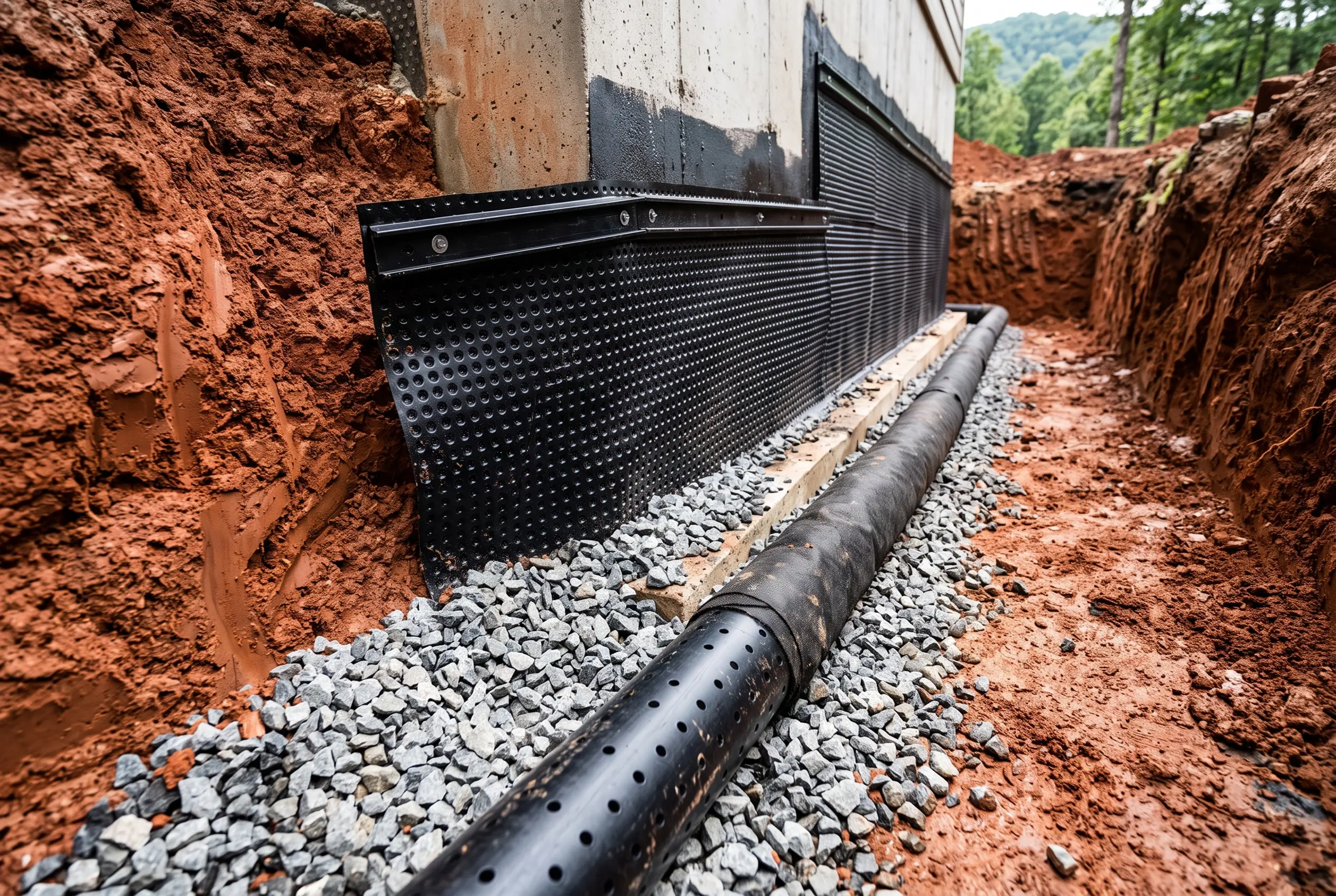
If there’s one universal recommendation for every WNC homeowner, it’s this: invest in waterproofing before you invest in anything cosmetic.
Why Waterproofing Is Critical for Western NC Homes
- Annual rainfall regularly exceeds 45 inches — and 70+ at higher elevations
- Mountain terrain funnels groundwater directly toward foundations
- Basements and crawl spaces are the first casualties
- Water damage compromises everything from framing to indoor air quality
- Properties in valley areas should also be checked against the FEMA Flood Map Service Center
Waterproofing Methods for Western North Carolina
- Interior waterproofing — sealants, coatings, and interior perimeter drains
- Exterior waterproofing — excavation, membranes, and footing drain tile
- Foundation waterproofing — critical for basements and crawl spaces
- Crawl space encapsulation — vapor barriers, sealing, and dehumidification
Because drainage and site work are inseparable in the mountains, review how drainage impacts retaining wall longevity and our land clearing, excavation & grading service.
Step-by-Step Waterproofing Process
- Moisture assessment and full inspection
- Identify actual water entry points (not just symptoms)
- Select the appropriate waterproofing method
- Evaluate exterior grading and drainage discharge
- Implement interior or exterior solutions
- Install sump pump and/or dehumidification systems
- Test and verify performance under real rainfall
- Establish an ongoing maintenance plan
Waterproofing Solutions & Investment Guide
| Solution Type | Best For | Cost Range | Longevity | ROI |
|---|---|---|---|---|
| Interior Sealants/Coatings | Minor seepage | $500–$2,000 | 5–10 years | Moderate |
| Drainage/Grading Fix | Surface water | $1,000–$5,000 | Permanent | High |
| Sump Pump Installation | Basement water | $1,500–$3,500 | 10–15 years | High |
| Interior Waterproofing System | Moderate moisture | $3,000–$8,000 | 10–15 years | High |
| Exterior Excavation/Barriers | Severe water issues | $8,000–$20,000+ | 20+ years | Very High |
| Crawl Space Encapsulation | Under-home moisture | $4,000–$10,000 | 15–20 years | High |
For sloped lots, material choice matters as much as method — see retaining wall materials sloped lots demand.
Waterproofing & Preventing Mold in Western NC
- Keep indoor relative humidity below 50% year-round
- Verify bathroom, kitchen, and attic ventilation actually exhausts outside
- Use whole-home dehumidifiers in chronically damp properties
- Hire professional remediation when affected area exceeds roughly 10 square feet
9. Custom Homes in Western North Carolina
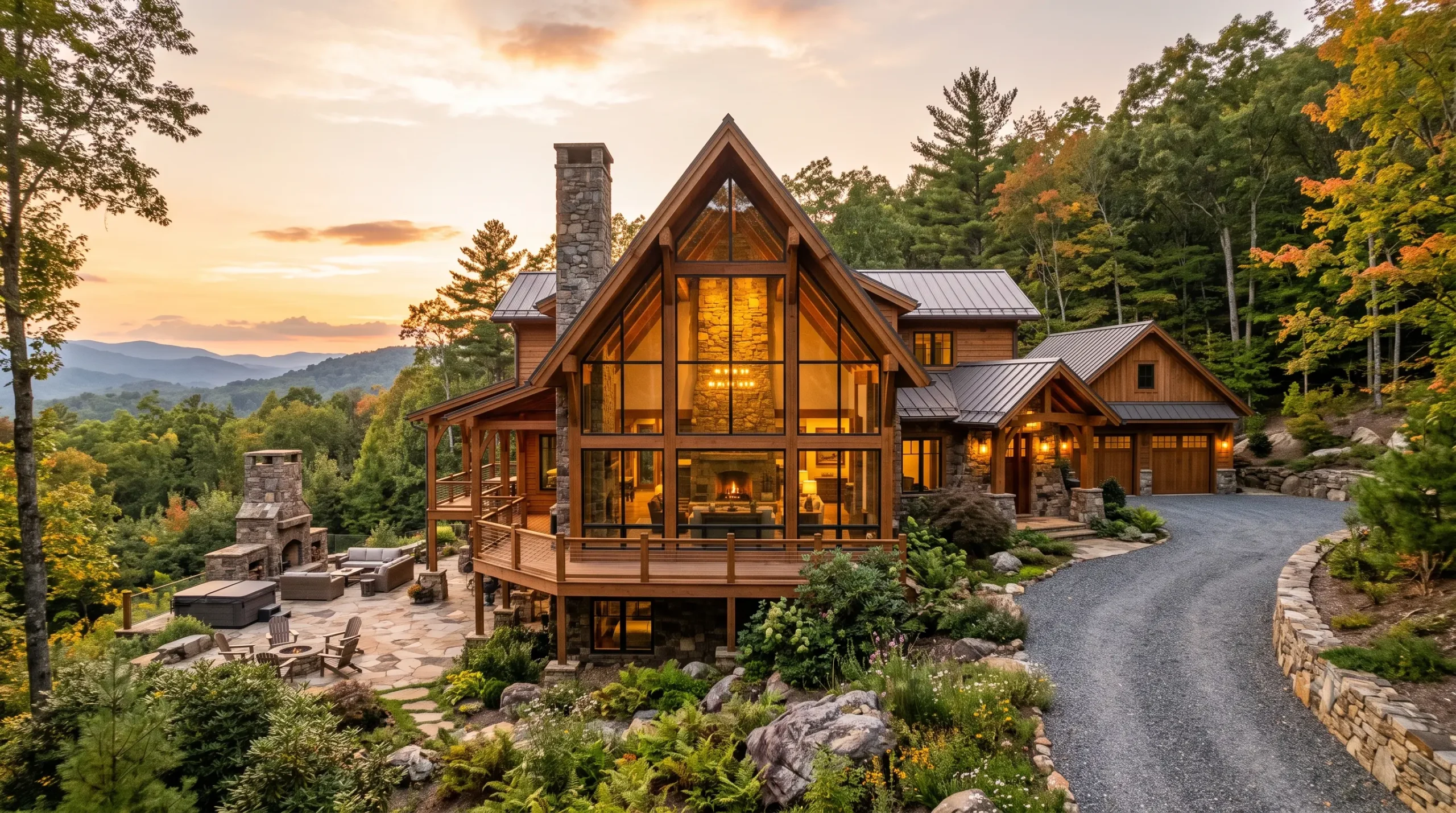
Building a custom home in Western North Carolina is a dream for many — but success depends on land selection, thorough planning, and builders who genuinely understand mountain construction.
Building Custom Homes in Western North Carolina
Custom home advantages include:
- Full design control tailored to how you actually live
- Optimized energy performance from day one
- Integration with mountain views and natural terrain
- Style flexibility — mountain modern, farmhouse, timber-frame, rustic cabin
Learn more about our work as a custom home builder and our custom cabins & mountain homes portfolio.
Custom Home Design Considerations for Western NC
- Climate-responsive design — deep overhangs, correct roof pitch, tight building envelope
- Energy efficiency — high R-value insulation, heat pumps, high-performance glazing (see energy-efficient luxury mountain home features that pay off)
- Site integration — orientation for solar gain, privacy, and view preservation (see designing homes around views and natural light)
- Regional materials — local stone, timber, and mountain-appropriate exteriors
- Smart systems — reviewed in smart home technology for luxury custom homes
Step-by-Step Custom Home Building Process
- Land acquisition and site evaluation — slope, access, percolation, utilities
- Architectural design and planning
- Environmental and geological surveys — including soil testing
- Permit acquisition — often lengthy in WNC counties
- Site preparation and foundation
- Framing and structural build-out
- Systems installation — electrical, plumbing, HVAC
- Interior finishes
- Final inspections and certificate of occupancy
Site conditions drive budget more than most buyers expect — see how land slope affects construction costs and the hidden costs of building on private land in North Carolina.
Custom Home Building Cost Breakdown
| Phase | % of Budget | Timeline | Key Activities |
|---|---|---|---|
| Pre-Construction | 5–10% | 2–4 months | Planning, permits |
| Foundation & Site Work | 10–15% | 3–6 weeks | Excavation, foundation |
| Framing | 15–20% | 4–8 weeks | Structural completion |
| Exterior | 15–20% | 4–6 weeks | Roof, siding, windows |
| Interior Systems | 15–20% | 6–8 weeks | Electrical, plumbing, HVAC |
| Interior Finishes | 20–25% | 6–10 weeks | Drywall, flooring, paint |
| Final Details | 5–10% | 2–4 weeks | Inspections, walk-throughs |
Custom Home Building Costs in Western North Carolina
| Home Size | Cost Range | Price/Sq Ft | Timeline |
|---|---|---|---|
| 1,500 sq ft | $225,000–$375,000 | $150–$250 | 9–12 months |
| 2,000 sq ft | $300,000–$500,000 | $150–$250 | 10–14 months |
| 2,500 sq ft | $375,000–$625,000 | $150–$250 | 12–16 months |
| 3,000+ sq ft | $500,000–$1,000,000+ | $150–$250+ | 14–20 months |
For current regional numbers, see our cost to build a custom home in Weaverville, NC guide and how much a luxury mountain home costs in Western NC.
Custom Home Financing & Permitting in Western NC
- Construction loans typically convert to a permanent mortgage at completion
- Permit timelines vary by county — commonly 4–12 weeks; check requirements through Buncombe County Permits & Inspections
- HOA restrictions apply in many mountain communities
- Building code compliance is enforced statewide with local amendments
Building on raw or rural land? Start with how to build on mountain land in Western North Carolina and what to know before buying private land for a custom home.
10. Choosing a Contractor in Western North Carolina
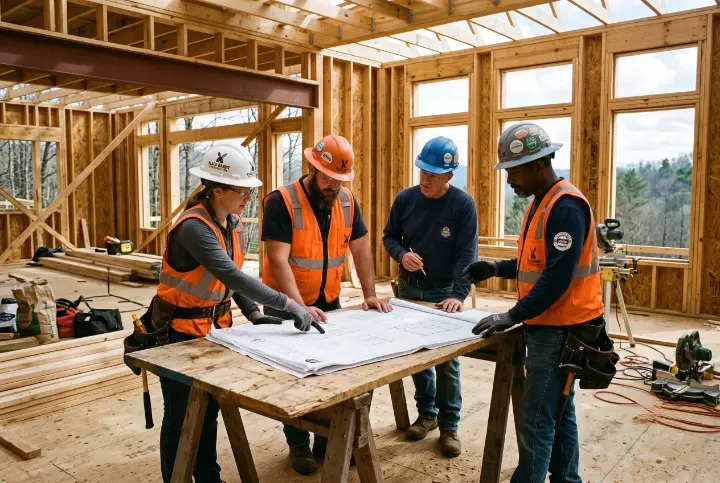
Every project in this guide depends on one decision: choosing the right contractor. The wrong hire turns a dream remodel into years of frustration.
How to Choose the Right Contractor for Your Western NC Project
- Verify local experience — WNC codes, terrain, and climate are not generic
- Confirm licensing and insurance before any money changes hands
- Check recent, verifiable references from comparable projects
- Walk away from vague estimates and pressure tactics
Our own approach is outlined on why choose Black Rabbit Construction, and you can meet the team on our who we are page.
Contractor Credentials & Licensing in Western North Carolina
North Carolina requires general contractor licensing for projects exceeding $30,000. Electricians, plumbers, and HVAC technicians hold separate specialty licenses. Always verify:
- Active license via the NC Licensing Board for General Contractors
- Current liability insurance and workers’ compensation
- Bonding for larger-scope projects
- Independent reviews and reputation — read our reviews
Step-by-Step Process for Choosing a Western NC Contractor
- Gather 5–7 referrals from neighbors, reviews, and directories
- Verify licensing, insurance, and references
- Request detailed written estimates from at least three firms
- Interview each contractor in person
- Compare pricing, timelines, and communication style — see how to compare builder estimates correctly
- Review contract terms line by line
- Confirm warranty and guarantee policies
- Sign a detailed written agreement
For design-build specifically, read how to choose the right design-build firm in Weaverville and design-build vs. architect + builder.
Contractor Evaluation Checklist
| Criteria | Look For | Red Flag | Weight |
|---|---|---|---|
| License/Insurance | Valid NC license, liability & workers’ comp | Missing or expired | Critical |
| Experience | 10+ years, local WNC projects | New to market | Critical |
| References | 3+ recent, verifiable clients | Unwilling to provide | Critical |
| Written Estimates | Detailed, itemized scope | Vague or verbal | High |
| Communication | Responsive, professional | Slow or dismissive | High |
| Local Knowledge | WNC climate, codes, suppliers | Unfamiliar with region | Moderate |
| Warranty | Clear written terms | No warranty offered | Moderate |
| Pricing | Competitive, mid-range | Suspiciously low | High |
Questions to Ask Your Western NC Contractor
- How many similar projects have you completed in WNC?
- Are you familiar with my county’s building codes and inspectors?
- What is your timeline and payment schedule?
- What warranty do you offer, in writing?
- How do you handle change orders and weather delays?
- Can I speak with three recent clients — and see the work?
- Are you bonded and insured?
- What’s included versus excluded in this estimate?
- Who is my day-to-day point of contact?
- How do you handle site protection and cleanup?
Our expanded list of questions to ask a custom home builder covers the reasoning behind each one.
Understanding Contractor Agreements & Contracts
Every contract should include:
- Detailed scope of work with material specifications
- Payment terms (commonly 1/3 down, 1/3 midway, 1/3 at completion)
- Timeline with defined milestones
- A formal change order procedure — see why change orders cause most delays
- Warranty terms and dispute resolution
- Insurance and liability clauses
- Lien waivers protecting your final payment
Review our terms of service for an example of how a professional firm structures expectations.
Red Flags When Choosing a Contractor
| Red Flag | Why It Matters | Action |
|---|---|---|
| Cash-only payments | No legal protection or paper trail | Avoid |
| No written contract | No legal recourse | Do not proceed |
| Pressure for large upfront payment | Potential scam | Walk away |
| No license/insurance | Liability falls on you | Do not hire |
| Refuses references | Likely poor quality | Major concern |
| Extremely low bid | Corners will be cut | Investigate carefully |
| No warranty offered | No recourse if work fails | High risk |
| Poor communication | Delays are guaranteed | Problematic |
Dig deeper into red flags when hiring a builder and why cheap bids often become expensive mistakes.
Comparison Table: All Home Remodeling & Repair Projects Overview
| Project Type | Typical Cost | ROI | Timeline | Complexity | Contractor Required |
|---|---|---|---|---|---|
| Kitchen Remodeling | $12,500–$49,000 | 50–70% | 4–8 weeks | High | Yes |
| Bathroom Remodeling | $10,000–$30,000 | 50–70% | 4–6 weeks | High | Yes |
| Basement Remodeling | $20,000–$50,000+ | 70–80% | 8–12 weeks | Very High | Yes |
| General Home Repairs | $500–$10,000+ | Variable | 1–4 weeks | Moderate | Often |
| Structural Repairs | $5,000–$50,000+ | High | 3–12 weeks | Very High | Yes |
| Plumbing Work | $1,500–$6,000+ | Moderate | 1–6 weeks | Moderate-High | Yes |
| Deck Construction | $2,000–$30,000+ | Moderate | 2–10 weeks | Moderate-High | Yes |
| Waterproofing | $500–$20,000+ | Very High | 1–6 weeks | Moderate | Yes |
| Custom Home Build | $225,000–$1M+ | 80–100% | 9–20 months | Very High | Yes |
| Contractor Selection | N/A | Critical | Variable | Moderate | N/A |
Frequently Asked Questions About Home Remodeling in Western North Carolina
What’s the average cost of a home remodel in Western North Carolina?
Costs vary significantly by scope. Kitchen remodels range from $12,500–$49,000, bathroom remodels from $10,000–$30,000, and basement finishes from $20,000–$50,000+. Custom home builds run $225,000–$1,000,000+. WNC costs trend slightly higher than flatland markets due to mountain terrain, climate-driven material requirements, and transport distance.
How long does a typical home remodeling project take?
Kitchen or bathroom remodels typically take 4–8 weeks. Basement finishing takes 8–12 weeks. Deck construction takes 2–10 weeks. Structural repairs take 3–12 weeks. Custom home builds take 9–20 months. See our luxury home renovation timeline expectations for a realistic phase-by-phase breakdown.
Do I need permits for home remodeling projects in Western NC?
Yes. Most projects — kitchen and bathroom remodels, structural work, decks, plumbing, and electrical — require permits. Permits typically cost $100–$500 and are essential for code compliance, resale, and insurance claims. Requirements vary by county, so confirm with your local permitting office.
How can I prevent water damage and mold in my Western NC home?
Combine proper exterior grading, functioning gutters and downspouts, foundation waterproofing, sump pumps, dehumidification, and adequate ventilation. Interior sealants handle minor seepage; exterior waterproofing addresses severe intrusion. Keep indoor humidity below 50% year-round.
What’s the best decking material for Western North Carolina?
Composite decking ($20–$35/sq ft) and PVC decking ($25–$40/sq ft) perform best in WNC’s wet, humid climate due to superior moisture resistance and minimal maintenance. Pressure-treated wood works on a budget but requires sealing every 1–3 years.
How do I know if I need structural repairs?
Warning signs include horizontal foundation cracks, bowing basement walls, sagging floors, doors and windows that no longer close, and visible water damage in crawl spaces. A licensed structural engineer should evaluate any of these before repair work begins.
What should I look for in a Western North Carolina home remodeling contractor?
Look for a valid NC license, liability insurance and workers’ comp, verifiable references, itemized written estimates, transparent communication, genuine WNC experience, and a contract with clear warranty terms. Verify credentials directly with the NC Licensing Board.
Can I remodel my kitchen and bathroom in the same project?
Yes — and it often saves 10–20% on labor by consolidating trades, permits, and mobilization. The combined timeline typically extends to 8–12 weeks. Choose a contractor experienced in coordinating multi-phase work.
What are common plumbing mistakes to avoid during remodeling?
Improper drain slope, insufficient venting, mixing incompatible pipe materials, missing shut-off valves, and ignoring hard water treatment. Always use a licensed plumber — mistakes discovered after drywall is closed are dramatically more expensive to fix.
What’s the ROI of different home remodeling projects in Western NC?
Kitchen and bathroom remodels return roughly 50–70%, basements 70–80%, decks 40–60%, and custom homes 80–100%+ at completion. Waterproofing delivers exceptional indirect ROI by preventing structural damage that can cost tens of thousands to repair.
How does Western North Carolina’s climate affect remodeling decisions?
High humidity, heavy rainfall, snow loads, and freeze-thaw cycles demand moisture-resistant materials, strong ventilation, robust drainage, and weather-tested finishes. Contractors who work here daily factor these into design and specification automatically.
What’s the difference between remodeling, renovation, and restoration?
Remodeling changes layout or function. Renovation updates and repairs existing structures without major layout changes. Restoration returns a home to its original condition. Many WNC homes need all three — see our guide on modernizing historic homes without losing character.
Regional Considerations Specific to Western North Carolina Home Remodeling
Western NC Climate Challenges in Remodeling
- High humidity demanding active moisture control
- Heavy rainfall requiring engineered drainage
- Snow and ice affecting deck, roof, and structural load requirements
- Seasonal temperature swings stressing materials and joints
- Hard water requiring treatment systems in many communities
Building Codes & Permits in Western North Carolina
Permitting varies across Buncombe, Henderson, Madison, Haywood, and Transylvania Counties. Every project must comply with the NC State Building Code, applicable flood zone regulations, and — in protected watershed areas — additional environmental restrictions. Permit approval commonly takes 2–8 weeks and longer for custom builds.
Material Sourcing & Labor Availability in Western NC
- Contractor demand is high; book 3–6 months ahead for summer projects
- Material costs run slightly higher due to transportation
- Winter often brings better pricing and faster scheduling
- Specialty trades — structural, waterproofing, excavation — require the earliest booking
Serving homeowners in Asheville, Black Mountain, Hendersonville, Fairview, and Weaverville.
Money-Saving Tips for Home Remodeling in Western North Carolina
- Combine projects — consolidating trades saves 10–20% on labor
- Invest in durable materials — lower total cost of ownership in this climate
- Phase strategically — address structure and water before finishes
- DIY where it’s safe — painting, demo, and finishing details
- Negotiate progress payments instead of large upfront deposits
- Get multiple bids — typical savings of 15–25%
- Choose mid-range finishes for the best value-to-durability ratio
- Schedule off-season for better rates and availability
- Prioritize waterproofing to prevent five-figure repairs later
- Budget 10–15% contingency on every project — see renovation budget mistakes luxury homes pay for later
Conclusion: Your Complete Guide to Home Remodeling in Western North Carolina
Home remodeling in Western North Carolina is unlike remodeling anywhere else. The region’s climate, terrain, and building traditions demand specialized materials, experienced contractors, and thoughtful planning. Whether you’re upgrading a kitchen, waterproofing a basement, adding a deck with mountain views, or building a fully custom home, success comes down to preparation and the right team.
Key takeaways:
- Prioritize high-ROI projects and essential repairs first
- Never compromise on contractor vetting — verify everything in writing
- Design for WNC’s climate, not against it
- Budget realistically with a 10–15% contingency
- Set timelines that reflect real permitting and weather conditions
- Invest in waterproofing and structural integrity before cosmetic upgrades
Ready to Start Your Western NC Remodel?
Black Rabbit Construction is a design-build firm based in Weaverville, NC, specializing in high-end renovations, structural remodeling, outdoor living, and custom mountain homes throughout Western North Carolina.
📍 108 Monticello Rd #300, Weaverville, NC 28787
📞 (828) 335-1962
✉️ gabe@blackrabbitconstructionnc.com
🗺️ Get Directions
👉 Explore Our Services | View Our Portfolio | Schedule a Tour | Contact Us Today