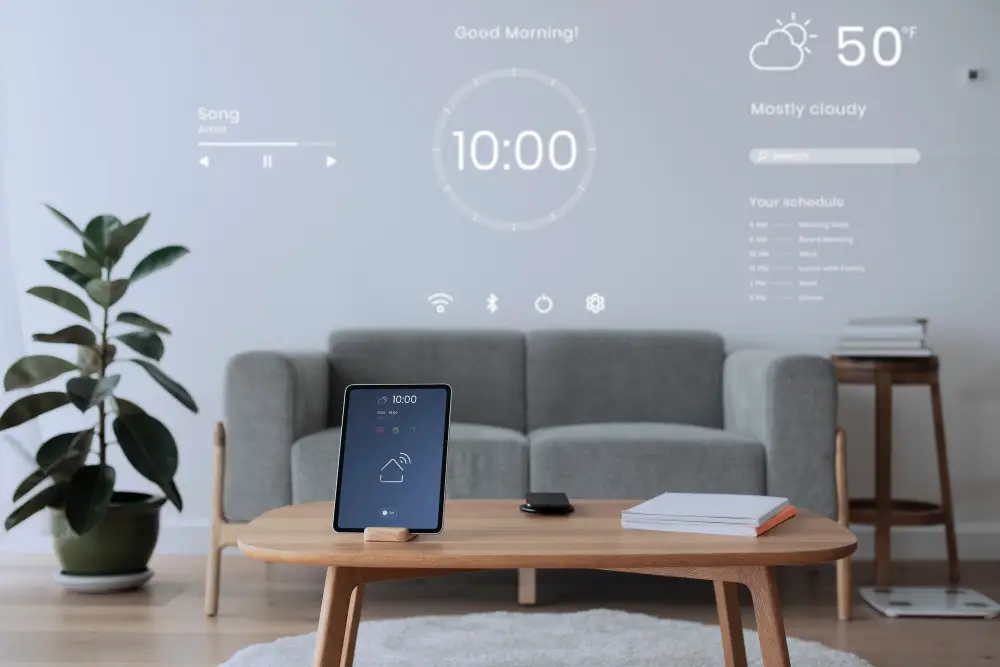
Smart home technology for luxury custom homes has matured considerably since the first wave of connected home products arrived in the market. What used to be a collection of apps, hubs, and devices that required IT expertise to maintain has consolidated into integrated control systems that are genuinely useful, architecturally invisible, and appropriate for homes at the specification level this market demands.
The smart home conversation in a luxury custom home in the Weaverville area in 2026 is not about whether to include technology, it is about which systems genuinely improve the occupant experience, how those systems are integrated into the architectural and mechanical program of the home, and how the rough-in infrastructure that supports them is specified and installed before the walls are closed.
Start With Infrastructure, Not Devices
The most consistent smart home mistake in luxury custom home construction is treating technology as an add-on, a layer of devices applied to a home after construction is complete. The smart home systems that perform best in luxury homes are the ones whose infrastructure was planned in the design phase and installed during construction: the conduit runs, the low-voltage wiring pathways, the equipment closet location, the in-wall speaker blocking, the shade motor blocking, all of the rough-in work that makes technology installations clean and permanent rather than surface-mounted and visible.
A luxury custom home in the Weaverville area whose technology infrastructure was designed in the construction documents can integrate lighting control, audiovisual distribution, security, mechanical system control, and shading automation in ways that are architecturally invisible. The same home with technology added after construction has visible wiring, surface-mounted hardware, and compromises in system performance that the infrastructure investment would have prevented.
Smart home technology for luxury custom homes begins with the design documentation, not with the device selection.
Lighting Control Systems
Lighting control is the smart home category with the most direct impact on daily quality of life in a luxury mountain home. Automated lighting scenes, preset combinations of fixture brightness and color temperature that shift through the day to match the natural light cycle, change the feel of a mountain home across the morning, the afternoon, the evening, and the night in ways that manual switching cannot achieve.
For mountain homes in Western NC where the morning light from the east and the afternoon light from the west shift dramatically across the day, automated lighting that responds to those shifts, dimming the artificial light as daylight increases, warming the color temperature as the evening approaches, produces an interior environment whose quality accumulates across every day of occupancy.
The rough-in requirement for a whole-home lighting control system is a dedicated low-voltage network, neutral wire at every switch location, and conduit pathways from the equipment location to each controlled zone. These are rough-in specifications that must be in the construction documents before the electrical rough-in phase begins.
Mechanical System Integration
Heating, cooling, and ventilation systems in a luxury mountain home in the Weaverville area benefit from integrated control that allows zone-by-zone temperature management, schedule programming, and remote access. For homes used as primary residences with complicated daily schedules, the ability to pre-condition the home before arrival, to manage temperature independently across zones occupied by different household members, and to monitor system performance remotely are features that improve both comfort and energy efficiency.
The integration of the mechanical system into the home’s control platform requires mechanical equipment selected for compatibility with the control system, not every mechanical system integrates cleanly with every control platform, and the specification of both must be coordinated in the design phase before equipment is purchased.
For mountain cabins and second homes in the Weaverville area, remote monitoring of the home’s temperature, water leak detection, and security status while the property is unoccupied is the most valued smart home feature in the category, the ability to know that the home is performing correctly and to respond remotely if a condition requires attention.
Shading Automation
Motorized window shading in a luxury mountain home with significant south and west-facing glazing is both a comfort feature and an energy management feature. Automated shades that respond to solar angle, closing on the west-facing glazing during the afternoon hours when solar gain is highest in summer, opening on the south-facing glazing during winter days to maximize passive solar gain, reduce mechanical cooling and heating loads while maintaining the visual connection to the site that the glazing strategy was designed to deliver.
The rough-in requirement for motorized shading is blocking in the window rough opening for the shade pocket, conduit or wiring chase for the motor power and control wire, and the control integration that connects the shade positions to the home’s central control system. All of these are rough-in specifications that must be in the construction documents before framing.
Security & Access Control
Security systems in luxury mountain homes on private land in the Weaverville area serve a different function than in urban or suburban settings. The primary value is remote monitoring and notification, knowing that the property is secure, that the entry doors are closed, that water is not leaking, and that the temperature is within an acceptable range while the household is away.
Camera placement, motion sensor locations, entry door hardware, and the network infrastructure that supports remote access are all specifications that benefit from design-phase planning. Camera locations that are architecturally considered, positioned to cover the necessary fields of view without being visually prominent, require coordination with the exterior and interior design documentation before installation.
Localized Advice
Smart home technology for luxury custom homes in the Weaverville area is most effectively specified as a construction scope, not as an aftermarket addition. The technology infrastructure, the conduit, the wiring, the blocking, the equipment location, adds relatively little to the construction cost when it is installed during rough-in. It adds significantly to the cost and produces a compromised result when it is installed after the walls are closed and the finishes are complete. Private consultations are required before any project is scheduled. The number of annual projects accepted is limited to ensure every technology specification is coordinated with the architectural and mechanical program of the home.
FAQ
What is the most important smart home infrastructure decision in a luxury custom home?
Low-voltage wiring pathways and conduit runs installed during rough-in are the most important infrastructure decisions. These determine which technology systems can be installed cleanly and permanently versus which must be surface-mounted or wireless, a distinction that has significant implications for the architectural quality of the finished installation.
Do smart home systems require ongoing professional maintenance?
Integrated control systems from professional-grade manufacturers require periodic software updates and occasional system adjustments as devices are added or changed. Many luxury home owners engage a home technology firm on a service agreement for ongoing maintenance. This ongoing cost should be factored into the technology specification decision from the outset.
Can smart home technology be added to a mountain home after construction is complete?
Yes, but with limitations. Wireless systems avoid the need for wired rough-in and can be added post-construction. They trade some reliability and architectural cleanliness for installation flexibility. For the features most valued in luxury mountain homes, integrated lighting control, motorized shading, mechanical system integration, a wired infrastructure produces meaningfully better performance than wireless alternatives.
Plan the Technology Before You Close the Walls
Smart home technology for luxury custom homes performs best when it is designed into the construction documents, not added after the finishes are complete. Limited annual projects are available. Private consultations are required before any project is scheduled.
Request Your Private Consultation → Start Your Discovery Phase → Discuss Your Project →