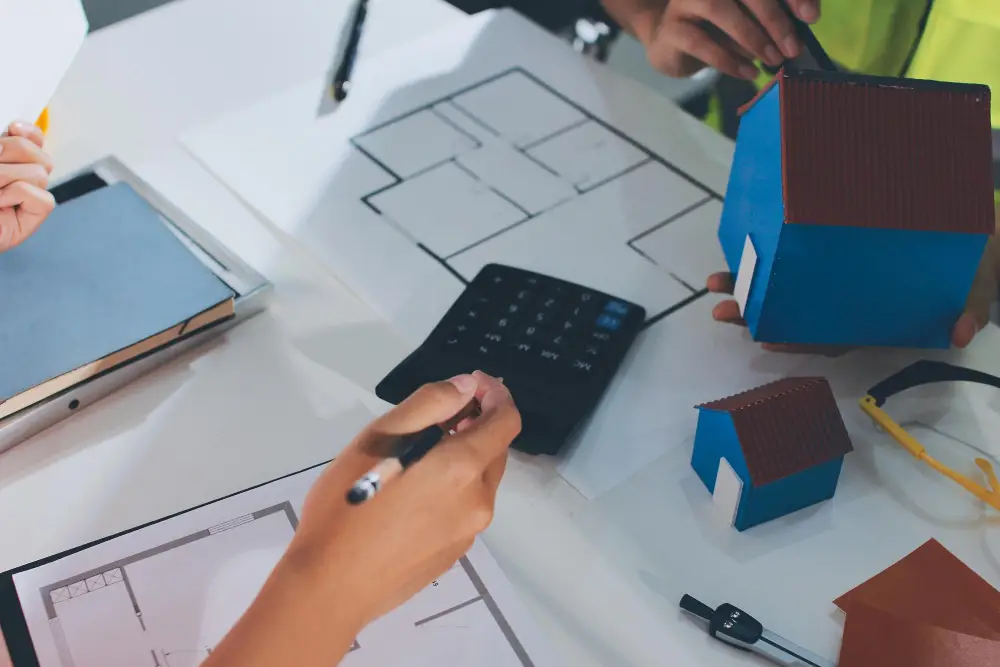
Almost every custom home budget starts out feeling solid and ends up somewhere higher. The owner did the math, added a cushion, and still watched the final number climb past the plan. It happens so often that people treat cost overruns as a fact of building, something you brace for rather than prevent.
They are not inevitable. Most overruns come from a handful of predictable gaps, and the way a project is structured decides how many of those gaps it leaves open. This is where design build reduces cost overruns in a way the traditional split between an architect and a builder cannot. When the design and the construction are one team, the gaps that drive overruns mostly close before the work begins. Here is exactly how that works.
Where Cost Overruns Actually Come From
Before the fix, it helps to name the cause. Overruns are not usually bad luck. They come from a short list of gaps.
A design priced by a builder who had no hand in it, and turns out to cost more than the budget allows. Conditions discovered mid-project that no one planned for. Decisions made too late, so finished work has to be redone. Problems that fall between the architect and the builder, with the owner paying for the seam. Change orders that pile up once the work is underway. Every one of these traces back to the same root, which is a project where the design and the construction were planned apart. The reason design build reduces cost overruns is that joining them closes these gaps at the source.
Pricing the Design As It Is Drawn
The first and largest overrun comes from a design that was never priced as it was created. In the traditional model, the architect designs first and the builder prices later. If the design calls for more than the budget allows, that shows up after the drawings are done, and the fix is a redesign.
Design-build removes that gap. The builder is part of the design from the start, so the cost is known as the home is drawn, not discovered after. The design gets built within the budget because it was designed within the budget. This is the clearest way design build reduces cost overruns, because the single most expensive surprise, a design the budget cannot carry, never happens in the first place.
Reading the Site Before the Design
The second overrun comes from the ground itself. Conditions no one checked, the slope, the soil, the drainage, the access, surface partway through the build and force expensive changes.
In a design-build approach, the discovery phase begins before any design work. The site is read first, so its conditions are known before the home is designed rather than discovered after the budget is set. On raw or mountain land, this matters enormously, because the site holds most of the surprises. Reading it early is a large part of how design build reduces cost overruns, since a condition planned for is a fraction of the cost of a condition discovered.
Settling Decisions Early
The third overrun is timing. In a build, a decision made late costs more than the same decision made early. A finish chosen after the relevant work is done means redoing that work. A layout change after framing means reframing. A fixture picked after the rough-in means moving plumbing.
Because design-build plans the design and the selections as one before construction starts, the decisions are settled early, and the build follows the plan instead of chasing it. Fewer late changes means less torn-out and redone work, which means fewer overruns. This is a quiet way design build reduces cost overruns, and it also keeps the schedule from slipping, since the trades are not waiting on choices that should have been made already.
Closing the Seam Between Design & Construction
The fourth overrun is the seam. When the architect and the builder are separate firms, problems fall between them, and the owner pays for the gap and the delay while each points at the other.
Design-build has no seam. One team owns both the design and the construction, so there is no gap for a problem to fall into and no one to hand it off to. This single point of accountability is one of the main reasons design build reduces cost overruns, because a problem that has a clear owner gets solved once, instead of becoming a dispute that adds cost and time.
Controlling Change Orders
The fifth overrun is change orders. Every build has some change, but in a split project each change often means going back to the architect, then back to the builder, with cost and time added at each step. The changes pile up, and so does the total.
In design-build, the same team handles a change in one place, which tends to be faster and less costly. The change still costs something, but it does not multiply as it passes between firms. Across a full project, controlling how changes are handled is a real part of how design build reduces cost overruns, because change is where budgets move most.
Why This Matters More on a Mountain Build
In Western North Carolina, the case is even stronger, because mountain builds carry more of the unknowns that drive overruns. Slope, soil, access, and the infrastructure a rural property needs all introduce conditions a design drawn in isolation can miss.
When the team designing the home is the same team handling the site and the build, those conditions get worked into the plan from the start. This is why design build reduces cost overruns most on exactly the demanding sites that are common in the mountains. The harder the land, the more a single accountable team protects the budget in the places the split model leaves exposed.
What People Usually Ask About
What Design-Build Does & Does Not Guarantee
No approach can promise a build with zero change. What design-build does is close the gaps that cause most overruns, so the final number tends to stay far closer to the plan. The goal is a predictable budget, not a magic one, and predictability is what the structure protects.
How Design-Build Handles Unexpected Conditions
By finding them earlier. The site is read before the design, so many conditions are known up front, and the ones that still surface are handled by one team that owns both the design and the build. That means a solution instead of a dispute, which keeps the cost of a surprise far lower.
Why a Low Bid Does Not Prevent Overruns
Usually the opposite. A bid that comes in well under the others often got there by leaving things out, and the missing scope returns as change orders once the work starts. A realistic number that holds protects a budget far better than a low number that does not.
Building a Budget That Holds
The reason design build reduces cost overruns is not a trick. It is structure. Pricing the design as it is drawn, reading the site before designing, settling decisions early, closing the seam between design and construction, and controlling change orders all remove the gaps that overruns come from. Close the gaps and the final number stays close to the plan.
We work as a single design-build team and take a limited number of projects each year, so each one gets real attention, and a private consultation comes before we schedule anything. If you want a custom home budget that holds from start to finish in Western North Carolina, reach out for a private consultation, tell us about your project, and we will walk through how the process keeps the final number close to the one you start with.