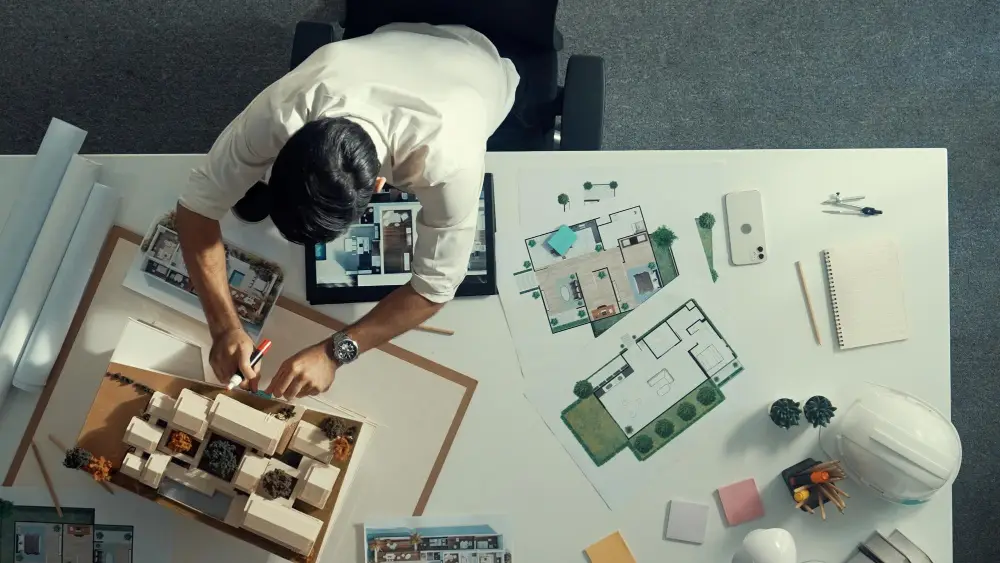
On a lot of builds, interior design happens after the construction is well underway. The house gets framed, the systems go in, and somewhere along the way the owner starts choosing finishes, fixtures, and materials. It feels like a reasonable order, and it is one of the most common reasons builds run late. The design decisions arrive after the work that depends on them, so the work waits, or gets done twice.
There is a better way, and it is about sequence. Interior design integration construction means the design and the build are planned together from the start, with the material and finish decisions made in step with the construction schedule rather than after it. Done this way, the design stops being the thing that holds up the build and becomes part of what keeps it moving. Here is how integrating the interior design saves real time, and why the order matters so much.
The Problem With Designing as You Go
When interior design runs behind the construction, the whole project waits on decisions. The tile has not been chosen, so the bathroom stalls. The cabinetry was ordered late, so the kitchen sits unfinished while it is built. The lighting was not planned, so the walls have to be opened to add circuits. Each of these is a delay, and each traces back to the same cause. A decision arrived after the work that needed it.
This is the core issue interior design integration construction solves. When the design decisions are made late, the construction either pauses to wait for them or proceeds and gets reworked once they arrive. Both cost time, and both are avoidable. The delay is not really a design problem or a construction problem. It is a sequencing problem, and sequencing is exactly what integration fixes.
How Integration Saves Time
When the interior design is integrated with the construction from the start, the decisions get made in the right order, ahead of the work rather than behind it. That single change removes most of the delays that come from designing as you go.
Decisions Ahead of the Work
With integrated design, the finishes, fixtures, and materials are chosen before the construction reaches the point where it needs them. The tile is selected before the bathroom is ready for it. The cabinetry is ordered early enough to arrive on time. Interior design integration construction means the build never waits on a decision, because the decisions are already made.
Procurement That Keeps Up
A lot of build delays come from lead times, the weeks or months it takes for materials and fixtures to arrive. When the design is integrated, procurement starts early enough that the long-lead items are ordered in time to meet the schedule. Designing as you go means discovering a twelve-week lead time the week you need the item. Integration means it was ordered twelve weeks ago.
No Reworking Finished Work
The most expensive delays come from doing work twice. A finish decided after the relevant work is done means redoing that work. A layout change after framing means reframing. Interior design integration construction removes this by settling the decisions before the work, so nothing has to come out and go back in. The work gets done once, correctly.
Systems Planned for the Design
Interior choices often have hidden requirements. A kitchen layout needs its plumbing and electrical in the right places. Lighting needs its circuits. When the design is integrated, these are planned into the systems from the start, rather than discovered as changes once the design catches up to the build. This is where integration saves not just time but the cost of change orders.
Why the Order Has to Be Right
The reason integration works is that it puts the decisions in the sequence the build actually needs. Construction is a chain, each stage depending on the one before it, and design decisions feed into that chain at specific points. When they arrive on time, the chain moves smoothly. When they arrive late, the chain stalls.
This is why interior design integration construction starts at the beginning of the project, not partway through. The discovery phase begins before any design work, and the interior design is planned alongside the architecture and the construction schedule from the start. The material selections are coordinated with the build timeline so procurement stays ahead of the work. Planned this way, the design and the construction move as one, which is the whole point.
What Integration Looks Like in Practice
Integration is less about a single step and more about a running rhythm through the project. It starts with the interior designer and the builder at the same table from the beginning, so the finishes and the construction are planned as one. The material selections are made in a sequence that matches the build, with the long-lead items chosen first so they arrive on time. The systems, the plumbing, the electrical, and the lighting, are planned around the interior choices rather than fixed before them and worked around later. And the schedule tracks the decisions, so nothing on site waits for a choice that has not been made.
This rhythm is what interior design integration construction really is. It is not a phase that happens once. It is the design and the build moving together from the first meeting to the final finish, with the decisions always kept ahead of the work. A project run this way rarely stalls on a missing selection, because the selections were planned into the schedule from the start.
Integration on a Mountain Build
In Western North Carolina, integrating the interior design matters even more, because mountain builds already carry conditions that can slow a project. The site work, the infrastructure, and the weather windows all put pressure on the schedule, so adding design delays on top of that compounds the problem.
A mountain build that integrates the interior design from the start protects the schedule against the delays it can control, so the conditions it cannot control have less to compound. The finishes and fixtures are chosen and ordered in step with the construction, so the design never becomes the thing holding up a build that the terrain is already testing. Because we plan the interior design with the construction and take a limited number of projects each year, each build gets that coordination, and a private consultation comes before we schedule anything.
Frequently Asked Questions
What Does Interior Design Integration Actually Mean?
It means the interior design and the construction are planned together from the start, rather than the design happening after the build is underway. The finishes, fixtures, and materials are chosen in step with the construction schedule, so the decisions are made before the work that depends on them. The design becomes part of the build process rather than a separate phase bolted on.
How Does Integrating Design Save Time?
By putting decisions ahead of the work instead of behind it. The build never waits on a finish that has not been chosen, procurement starts early enough to beat long lead times, and no work has to be redone because a decision came late. Most build delays come from decisions arriving after the work that needs them, and integration removes that.
Can I Still Make Design Choices During the Build?
Some flexibility is normal, but the major decisions are best made early, when they can be planned into the systems and the schedule. Late changes are where delays and rework come from. Integration does not mean everything is locked forever, but it does mean the decisions that affect the construction are made in time to keep the build moving.
Does Integrated Design Cost More?
It tends to cost less overall, because it removes the delays and the reworked work that drive up cost when design runs behind construction. The value is in what it prevents, the waiting, the change orders, and the work done twice. Coordinated from the start, the design and the build are more efficient together than they are handled separately.
Building Faster by Planning Together
The delays that come from designing as you go are some of the most avoidable on any build, and interior design integration construction is how you avoid them. Plan the interior design with the construction from the start, make the decisions ahead of the work, and order the materials in time to meet the schedule. Done that way, the design stops holding up the build and starts keeping it moving, which saves real time and real money.
If you are planning a custom home in Western North Carolina and you want a build that runs on schedule, reach out to Black Rabbit Construction for a private consultation. Tell us about your project, and we will walk through how integrating the interior design keeps the whole build moving.