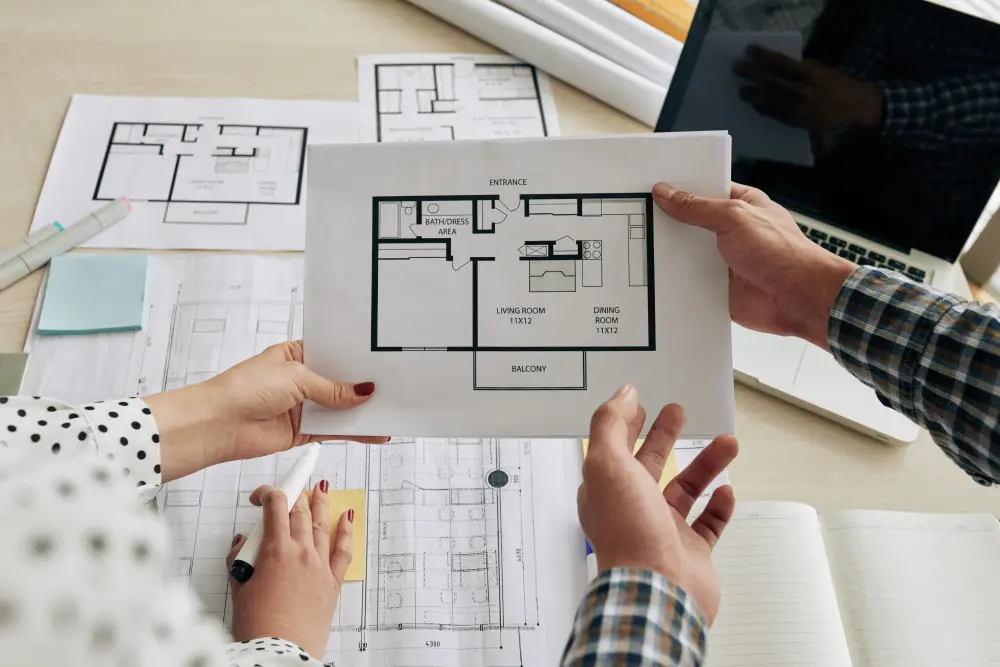
Older homes were built for a way of living that has mostly gone away. Kitchens were closed off because they were workrooms, hidden from guests. Dining rooms were formal and used a few times a year. Spaces were carved into small, separate boxes, each with a single job, connected by hallways that ate up the square footage.
The way people live now runs against all of that. The kitchen is where everyone gathers. Cooking, eating, working, and talking happen in the same space. Light is supposed to move through the house, not stop at every wall. So a home built on the old logic can have good bones, a great location, and rooms that simply do not fit the life happening inside them.
This is the case for reworking the layout rather than moving. When you reconfigure old floor plan luxury home owners often find they already have the home they want, hidden inside the one they have. The walls just need to move. Here is how that work actually plays out.
Why Old Layouts Feel Wrong Even When Nothing Is Broken
Nothing has to be failing for a floor plan to feel off. The house can be sound and still feel like it is working against you.
The signs are familiar. The kitchen is closed off from the rooms where everyone spends their time, so the cook is cut off from the gathering. Hallways take up space that could belong to rooms. A formal dining room sits dark and unused while the family crowds the kitchen table. Small, chopped-up rooms make the house feel tight even when the total square footage is generous. Light gets trapped on one side of the house because walls block it from reaching the rest.
None of these is a defect. They are a house built for a different era. The reason to reconfigure old floor plan luxury home layouts is not that anything is wrong. It is that the plan no longer matches how people live, and that mismatch is felt every single day.
What Reconfiguring Actually Involves
Moving walls in an older home is rarely as simple as it looks on a sketch, because the walls are often doing more than dividing space.
Working With the Structure, Not Against It
Many of the walls you would want to remove are carrying load. Taking one out means transferring that load somewhere else, which calls for engineered beams, proper headers, and posts placed where the weight can travel down to the foundation. This is structural work, calculated and permitted before any framing is touched. Done right, the wall disappears and the ceiling above it stays exactly where it should. Done casually, it is the kind of mistake that shows up as a sag years later. To reconfigure old floor plan luxury home spaces safely, the structure has to be solved first.
Moving the Systems With the Walls
When walls move, the systems inside them move too. Plumbing, electrical, and mechanical runs that lived in the old walls have to be rerouted to serve the new layout. A kitchen that shifts to a new spot needs its supply, drain, and circuits to follow it. This is the work that hides inside the walls, and it is the part that separates a clean result from a compromised one.
Opening Sightlines & Light
The point of most reconfigurations is connection. Opening the kitchen to the living space. Bringing light from one side of the house to the other. Creating clear sightlines so the home reads as connected rather than chopped up. This is the change people feel the most, because it is the one that turns a series of boxes into a home that flows.
The Opportunities People Miss
When you reconfigure old floor plan luxury home interiors, the walls are open and the structure is exposed. That moment is the best chance you will get to fix everything else at the same time, and skipping it means paying to open the same walls again later.
With the walls already open, it costs far less to update wiring and add the circuits a modern home needs. To reroute plumbing to where it should have been. To improve insulation in walls that are already exposed. To run wiring for lighting, controls, and technology that the original house never planned for. Reconfiguring the layout and modernizing the systems at the same time is the efficient path. The walls only have to come open once.
How This Plays Out in Mountain Homes
In Western North Carolina, reconfiguring an older home comes with a few local realities worth planning around.
Many homes here were built to capture a view from one or two rooms, with the rest of the house turned away from it. Reworking the layout is often a chance to open the whole home to the view it was built near but never fully used. Mountain light moves differently across a sloped lot through the seasons, and a reconfiguration can be planned to bring that light deeper into the house.
Older mountain homes were also frequently added onto in stages, which leaves layouts that do not connect well from one section to the next. When you reconfigure old floor plan luxury home spaces in a home like that, part of the work is tying those mismatched additions into one plan that finally reads as a single house. And because many of these homes sit on slopes and were built to older standards, the structural and system work behind the walls deserves a careful look while everything is open.
What People Think Through Before Starting
A few questions come up whenever someone is deciding to rework a layout rather than build new or move.
Reconfiguring Versus Moving
Moving means giving up the land, the location, and the setting you already have, and in the mountains those are often the hardest things to replace. When the bones and the location are good, reworking the layout usually delivers the home you want without surrendering the things that made the property worth keeping in the first place.
How Far the Changes Can Go
Most layouts can change more than owners expect. With the right structural work, load-bearing walls can come out, rooms can combine, ceilings can open, and the flow of the whole main level can change. The limits are set by the structure and the budget, not by the original plan, and a good evaluation early shows you what is possible before you commit.
How the Process Begins
It begins with reading the house as it is. The discovery phase begins before any design work, with a real look at the structure and systems behind the finishes, so the plan accounts for the home as built rather than as it appears. We take a limited number of projects each year, which means each one gets that attention, and a private consultation comes before we schedule anything.
Finding the Home Inside the One You Have
A dated layout does not mean a dated home. When the location is right and the structure is sound, the home you want is often already there, waiting behind a few walls that were placed for a different time. To reconfigure old floor plan luxury home interiors is to bring the house forward to the way you actually live, without leaving the land and setting you chose.
If you have a home in Western North Carolina with good bones and a layout that no longer fits, reach out for a private consultation. Tell us about your house and how you want to live in it, and we will walk through what reworking the floor plan could open up.