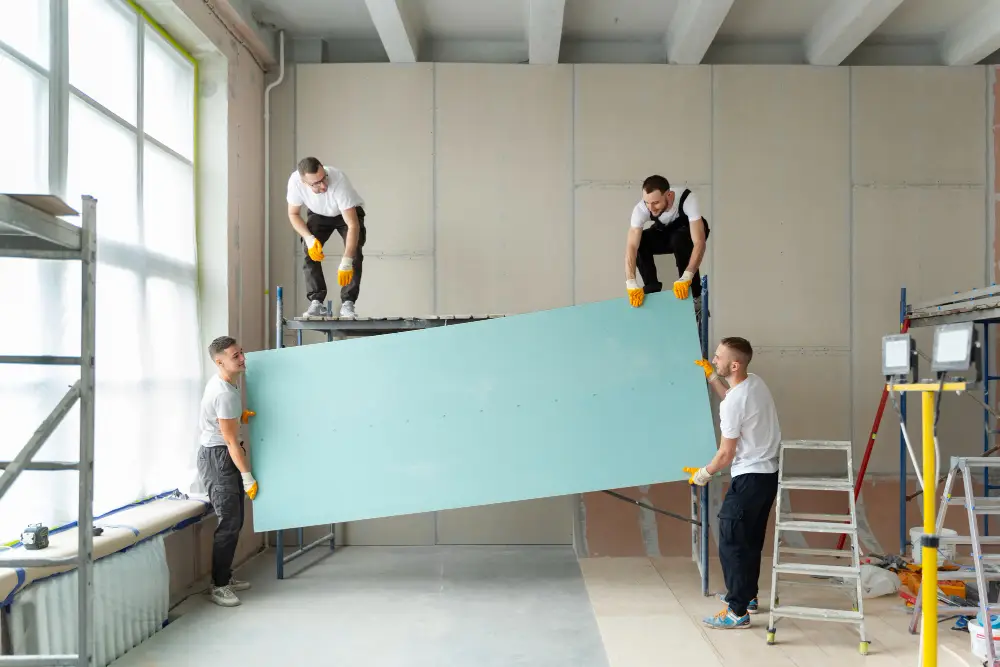
There is a point where renovating a house stops making sense. You patch one thing and another fails. You open a wall for a small job and find three larger ones behind it. The budget for a refresh keeps climbing because the house keeps revealing what it has been hiding. At some stage the smarter move is not another repair. It is taking the home down to its frame and rebuilding the inside from the structure out.
Knowing when you have reached that point is the hard part. Most people keep patching well past the moment it pays off, because each fix looks small on its own. The full interior reconstruction signs below are the ones that tell you the patching has run its course, and that a rebuild will cost less and last longer than another round of repairs.
The Difference Between a Remodel & a Reconstruction
A remodel works within the house you have. You update finishes, swap fixtures, maybe move a wall. The structure, the systems, and the layout stay mostly as they are.
A full interior reconstruction goes further. The home is stripped to its frame. Insulation, wiring, plumbing, mechanical systems, and the floor plan are all rebuilt to current standards as one coordinated plan. The shell stays. Everything inside it is new and designed to work together.
The reason this matters is cost logic. A remodel makes sense when the bones are sound and you are improving on a good base. A reconstruction makes sense when the base itself is the problem, and the full interior reconstruction signs are really a list of ways the base tells you it has reached the end.
The Structural Signs
These are the ones that should move a rebuild from maybe to yes.
The Systems Are All Failing at Once
Houses age in clusters. A home built in the same decade tends to have wiring, plumbing, and mechanicals that wear out around the same time. When the panel is undersized, the pipes are original, and the heating system is on its last season all at the same time, replacing them piece by piece means opening the same walls again and again. Doing it all at once, with the walls already open, is one of the clearest full interior reconstruction signs there is.
Decades of Changes Have Left the Layout Fighting Itself
Many older homes have been changed by a string of previous owners, each adding a room or closing off a space without a plan tying it together. The result is a layout that works against itself. Hallways that lead nowhere. Rooms you walk through to reach other rooms. Wasted square footage that serves no one. When the floor plan itself is the problem, surface work cannot fix it, and a reconstruction lets you rebuild the layout around how the house should actually flow.
You Keep Finding Problems Behind the Walls
If every project turns up something worse than expected, the house is telling you something. Undocumented wiring. Plumbing that was never done right. Framing that was modified without engineering. Foundation settlement that moved everything above it. When the surprises stop being surprises, the case for opening the whole interior at once gets stronger, because you stop paying to rediscover the same issues one room at a time.
The Performance Signs
Some of the most useful full interior reconstruction signs are not dramatic. They are the daily costs you have learned to live with.
The House Is Never Comfortable
Rooms that never hold an even temperature, a system that runs constantly and still loses the fight, cold drafts in winter and heavy heat in summer. These point to insulation, an envelope, and mechanicals that were never planned to work together. You can chase comfort one room at a time for years, or rebuild the systems as one and fix it for good.
The Energy Bills Do Not Match the House
A home that costs far more to run than it should is usually leaking through walls, windows, and an envelope that was built to an older standard. Adding a new system to a house that loses heat through its skin treats the symptom. A reconstruction lets you address insulation, the envelope, and the mechanicals together, which is the only way the numbers actually come down.
Air Quality & Moisture Problems Keep Coming Back
Recurring mold, damp that returns no matter how often you clean it, air that feels stale. These trace back to ventilation, moisture control, and an envelope that was never detailed correctly. Surface treatments cover them for a season. A rebuild lets you fix the cause inside the walls rather than the stain on them.
The Signs Specific to Mountain Homes
Building in Western North Carolina adds its own list. A few full interior reconstruction signs show up more often in homes around Weaverville, Asheville, and the surrounding mountains.
Older mountain cabins and homes were often built in stages, with additions that never matched the original construction. Moisture from the climate finds the weak points in those transitions over time. Homes on slopes can show settlement that pulls the interior out of square. And many homes here were built before current standards for insulation and moisture control, which the mountain weather tests hard every year.
If your home was built in pieces over decades, sits on a slope that has moved, and struggles with moisture and comfort all at once, those signs tend to point the same direction. A coordinated rebuild usually solves more, for less, than another round of separate repairs.
What People Weigh Before Deciding
A few points come up whenever someone is deciding between more repairs and a full rebuild.
The Cost Compared to Repairs
A reconstruction is a larger number up front. The honest comparison is not against doing nothing. It is against the running total of repairs you will keep making, each one opening the same walls and solving one problem at a time. Across enough years, the piecemeal path often costs more and delivers less than rebuilding once.
Why a Coordinated Rebuild Outperforms Staged Repairs
When the interior is rebuilt as one plan, the systems are designed to work together. Insulation, mechanicals, electrical, plumbing, and layout all answer to a single design. Staged repairs cannot do that, because each one is solved in isolation without the others in view. The full interior reconstruction signs are, in the end, signs that your house needs one plan instead of ten.
How the Process Starts
It starts with reading the house as it actually is, not as it appears. The discovery phase begins before any design work, with a real evaluation of the structure, the systems, and the conditions behind the finishes. Because we take a limited number of projects each year, each one gets that level of attention from the start, and a private consultation comes before we schedule anything.
Knowing When to Stop Patching
The hardest part of owning an older home is knowing when repair has stopped paying off. The full interior reconstruction signs here are the markers. Systems failing together. A layout that fights itself. Problems that keep appearing behind the walls. Comfort, energy, and air quality issues that no single fix resolves.
When several of these show up at once, the house is telling you the base itself needs rebuilding. Doing it as one coordinated plan, down to the frame and back out, gives you a home that performs as though it was built right from the start.
If your home is showing these signs and you are weighing your options in Western North Carolina, reach out for a private consultation. Tell us about your house and what you have been dealing with, and we will help you see if another repair or a full reconstruction is the better path forward.