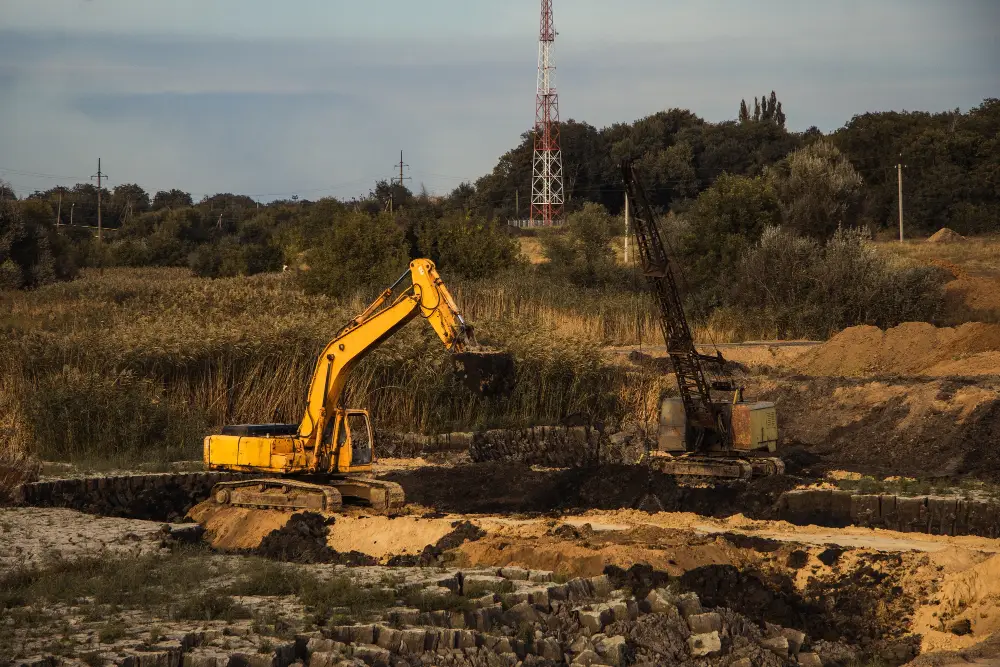
Excavation grading cost mountain lot NC is one of those budget line items that clients building in the Western North Carolina region consistently underestimate, sometimes significantly. It is also one of the cost categories whose range is widest, because the conditions that determine it vary more dramatically across mountain parcels than almost any other aspect of residential construction.
This is the guide that explains what actually drives excavation and grading costs on mountain lots in North Carolina, what the numbers look like across different site conditions, and what you need to know before you purchase a parcel or commit to a construction budget.
Why Mountain Lot Excavation Costs More Than Flat-Site Work
Excavation and grading on a flat suburban lot is a relatively predictable operation. You establish the building pad elevation, cut or fill to achieve it, and move on. The equipment is standard, the access is straightforward, and the quantities are small.
Mountain lot excavation in Western North Carolina is a different category of work. The slopes that produce the views and the natural character clients are building toward are the same slopes that require significant earth movement to establish a usable building pad, a foundation that works with the grade, a driveway that is navigable year-round, and drainage conditions that protect the structure across decades of Western North Carolina precipitation.
The excavation grading cost mountain lot NC projects involve is driven by four primary variables: slope grade, soil and rock conditions, site access, and drainage requirements. Each of these varies significantly across mountain parcels in this region, and each contributes independently to the total excavation and grading cost of a specific site.
The Four Cost Drivers
Slope Grade
Slope grade is the most direct determinant of excavation and grading cost on a mountain lot. The steeper the slope, the more earth must be moved to establish a flat building pad, the more retaining structure is required to hold the cut faces stable, and the more complicated the driveway routing becomes to achieve grades that work for residential use.
General slope grade cost implications for mountain lots in Western North Carolina:
Under 10% grade: Modest site preparation requirements. Building pad establishment, basic drainage grading, and standard driveway construction. Site preparation in this range runs $20,000 to $50,000 for a typical residential building footprint.
10–20% grade: Meaningful cut-and-fill volumes. Foundation type options narrow toward crawl space or stepped slab configurations. Driveway design requires more careful grade management. Site preparation in this range runs $50,000 to $100,000.
20–30% grade: Significant cut-and-fill. Stepped foundation systems or full basement configurations become the appropriate structural response to the slope. Retaining walls at the building pad edges are typically required. Driveway routing may require switchback sections or significant retaining along the driveway corridor. Site preparation in this range runs $80,000 to $150,000.
Above 30% grade: Site preparation costs can approach or exceed the construction cost of the home on smaller programs. Full engineering oversight of the excavation sequence is required. Equipment selection and operation on steep slopes requires specialized capability. Site preparation in this range runs $120,000 to $250,000 or more.
Soil & Rock Conditions
The soil and rock conditions beneath a mountain lot in Western North Carolina directly affect excavation difficulty and cost in ways that slope grade alone does not predict. The Appalachian geology of this region produces rock shelf at varying depths, a condition that requires blasting or mechanical breaking rather than conventional excavation when the rock is encountered at or above the required excavation depth.
Rock excavation adds $15,000 to $60,000 or more to the site preparation budget depending on the volume of rock that must be broken and removed. Rock shelf depth on a specific parcel is not consistently determinable from surface observation, it requires geotechnical investigation through soil borings or test pits to document before excavation begins.
Clay-bearing soils common in the lower slope positions and valley-adjacent areas of Western North Carolina compress under load and drain slowly, conditions that affect foundation design, drainage system requirements, and the stability of cut slopes during and after excavation. Clay sites require more careful drainage engineering and may require specialized foundation approaches that add to the foundation cost above what a granular soil site would require.
Site Access
Equipment access to the building site during excavation and grading is a practical constraint on mountain lots that flat-site construction does not present. The excavation equipment required for a mountain lot build, track excavators, bulldozers, scrapers, must reach the building site through whatever access the parcel provides.
On parcels where the building site is accessible from a public road via a route that can accommodate construction equipment, access adds nothing meaningful to the excavation cost. On parcels where the building site is set back from the public road across terrain that does not yet have a constructed access road, establishing a temporary construction access route before excavation can begin adds $10,000 to $40,000 to the early site work budget.
Access conditions also affect the equipment that can be used on the site. Very steep slopes or sites with tight access constraints may require smaller equipment that moves material more slowly and at higher cost per cubic yard than the larger equipment a more accessible site would allow.
Drainage Requirements
Drainage engineering is not separable from excavation and grading on mountain lots in Western North Carolina. The same earth movement that establishes the building pad and the driveway route also establishes the drainage conditions that will govern how surface water and groundwater move across the site for the life of the property.
Drainage system installation, french drains, surface drainage swales, culverts at driveway crossings, and engineered drainage systems at retaining wall bases, adds $10,000 to $50,000 to the site preparation budget depending on the drainage conditions of the specific site and the scope of the drainage engineering the site requires.
Retaining wall construction, which is part of the site preparation scope on most sloped mountain lots in this region, adds $15,000 to $150,000 or more to the site development budget depending on the height, the length, and the material system of the walls the site requires.
What the Excavation Grading Cost Mountain Lot NC Looks Like in Total
Pulling the primary cost drivers together, the excavation and grading budget for mountain lot development in Western North Carolina falls in the following ranges for typical residential projects:
Moderate slope, favorable soil conditions, straightforward access: $40,000 to $80,000 for a standard residential building footprint.
Steeper slope, mixed soil & rock conditions, longer driveway route: $80,000 to $150,000.
Steep to very steep slope, rock excavation required, significant retaining wall scope: $150,000 to $300,000 or more.
These ranges cover site clearing, grading, drainage system installation, and retaining wall construction. They do not include the foundation itself, which is a separate cost category above the site preparation scope.
Why the Site Assessment Comes Before the Excavation Budget
The excavation grading cost mountain lot NC figure for a specific parcel can only be estimated accurately after the slope grade is documented through a topographic survey, the soil and rock conditions are assessed through geotechnical investigation, the driveway routing is established through a site evaluation, and the drainage requirements are developed through civil engineering.
Without that information, any excavation and grading estimate is a rough order of magnitude based on regional averages, useful for general planning but not reliable enough to commit a construction budget to. The site assessment phase this firm conducts before any project begins produces the specific information that makes the excavation and grading estimate accurate for the specific parcel.
Discovery phase begins before design, and the site assessment is the first deliverable of that phase. Private consultations are available on a limited annual basis for clients evaluating mountain lots in the Weaverville area and across Western North Carolina.
Localized Advice for Western NC Mountain Lot Buyers
In the Weaverville area specifically, the ridge parcels in the Reems Creek corridor east of town and the elevated sites north toward the Madison County line present the most demanding excavation and grading conditions of any parcel type in the local market. These are also the parcels that deliver the most compelling site conditions for luxury custom home construction, which means the site development investment is proportionate to the quality of what the land offers.
Clients evaluating these parcels should budget for the upper end of the excavation and grading ranges described in this guide until a site assessment produces more specific information. Underestimating the site development budget on a ridge parcel in this area is one of the most consistent sources of total project budget overruns in the Western North Carolina luxury custom home market.
FAQ
Can the excavation & grading cost be estimated before a topographic survey is completed?
A rough order of magnitude is possible based on a site visit and general slope observation, but an accurate estimate requires survey data. The slope grade documented by a topographic survey is the primary input to the cut-and-fill volume calculation that drives the excavation cost estimate.
Does rock excavation always require blasting on Western NC mountain lots?
Not always. Rock that is fractured or weathered enough can sometimes be broken mechanically without blasting. Solid rock shelf at the required excavation depth typically requires blasting or pneumatic breaking equipment. The geotechnical investigation conducted in the site assessment phase documents the rock conditions before excavation begins.
Is excavation & grading included in the construction contract with Black Rabbit?
Yes. Site preparation, including excavation, grading, drainage system installation, and retaining wall construction, is managed as a coordinated phase of the construction program under the same unified contract as the primary structure. The team planning the site preparation is the same team that will build on the prepared site.
How long does excavation & grading take on a typical mountain lot in Western NC?
Excavation and grading duration on a mountain lot in the Weaverville area runs four to twelve weeks depending on the scope of the site work, the equipment access conditions, and the weather conditions during the grading period. Winter weather in this region can affect the grading schedule on exposed sites.
Know What Your Site Requires Before the Excavator Arrives
The excavation grading cost mountain lot NC figure that matters is the one specific to your parcel, developed from a site assessment that documents the actual slope conditions, the soil and rock conditions, and the drainage requirements of the specific ground you are building on. Private consultations are available on a limited annual basis.
Request Your Private Consultation → Start Your Discovery Phase → Discuss Your Project →