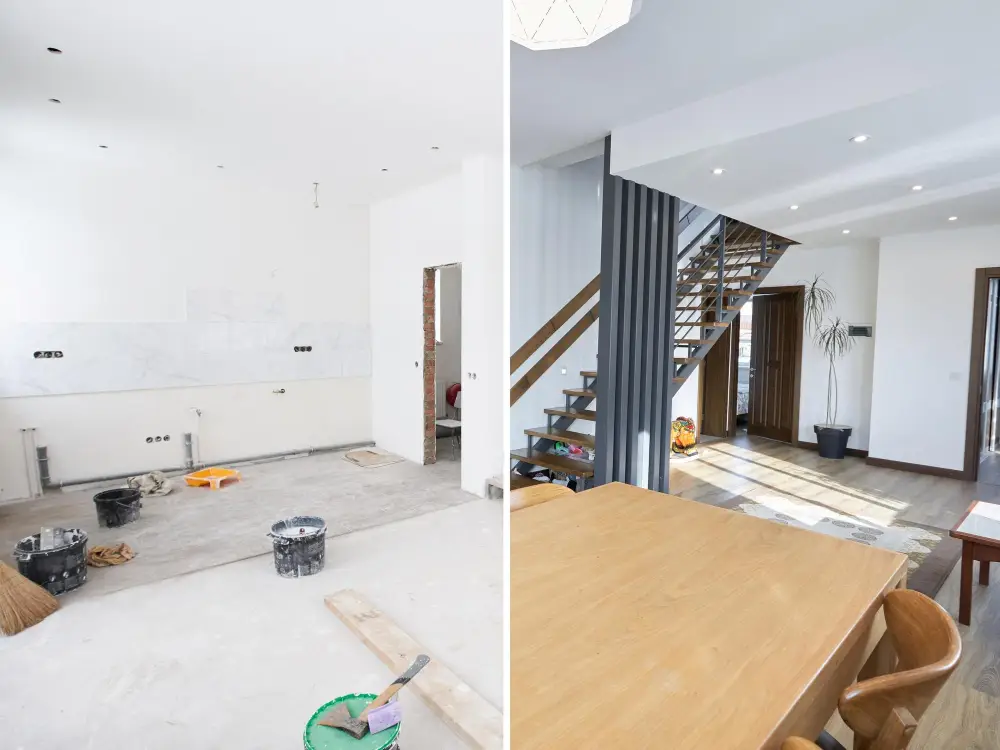
Whole-Home Renovation vs New Build: Which Makes Sense?
The renovation vs new build luxury home decision is one that clients in the Weaverville area arrive at from two directions. Some own an existing property, inherited, purchased, or long-occupied, and are weighing whether to renovate it to the standard they want or replace it with a structure built from the ground up. Others are evaluating an acquisition and trying to determine whether the existing structure on the parcel is worth keeping or whether the site would be better served by a new home designed and built specifically for it.
Both paths are legitimate. Both can produce a finished home that meets the quality and performance standard a luxury client is building toward. The decision between them is not a matter of one being categorically better than the other, it is a matter of which one is right for the specific property, the specific program, and the specific budget the client is working with.
What the decision requires is an accurate assessment of what the existing structure actually contains, what it would take to bring it to the intended standard, and how that scope and cost compares to the scope and cost of building new on the same site. That assessment is not something a client can conduct from a listing description or a casual walkthrough. It requires the kind of existing conditions documentation that a design-build firm with structural assessment experience conducts before any renovation scope or new construction program is developed.
When Renovation Makes Sense
Renovation is the right path when the existing structure offers something that a new build on the same site cannot replicate, and when the cost of bringing that structure to the intended standard is proportionate to the value it delivers.
The structure has architectural character worth keeping. Historic homes in the Weaverville area, older properties in established neighborhoods near the town center, and homes with distinctive architectural details or spatial proportions that reflect a standard of residential construction the production market does not replicate, these are structures where the existing fabric has value that demolition and new construction would forfeit. When the character of the existing home is the reason the client wants to be in it, renovation is almost always the right path.
The structural shell is sound. A renovation vs new build luxury home evaluation that reveals a foundation in good condition, structural framing without significant deterioration, and an exterior envelope that is intact and repairable is an evaluation that supports renovation. The cost of addressing sound structural systems through renovation is substantially lower than the cost of replacing them through new construction.
The site limits new construction options. Some parcels in the Weaverville area, properties in established neighborhoods with setback limitations, sites with slope conditions that complicate new foundation work, or properties where the existing home occupies a position on the lot that a new structure could not replicate, present conditions where retaining the existing structure is the most practical path to the finished outcome the client wants.
The renovation scope is contained. Whole-home renovations that address the interior systems, the finish quality, and targeted structural modifications, without requiring the replacement of the foundation, the structural shell, or the entire mechanical infrastructure, can be executed at a total project cost that is meaningfully lower than new construction at the same specification level. When the renovation scope can be contained to the elements that genuinely need addressing, renovation delivers the intended outcome at a more efficient total cost.
When New Construction Makes More Sense
New construction is the right path when the existing structure’s conditions, limitations, or costs make renovation a less efficient path to the intended outcome than building from the ground up.
The existing structure has significant structural deficiencies. When the existing conditions assessment reveals a foundation requiring full replacement, structural framing with widespread deterioration, or a building configuration that requires such extensive modification to achieve the intended program that the retained structure provides minimal value, the economic and quality argument for new construction becomes strong. Renovating a structurally compromised home to a luxury standard is a project where the client pays for both the remediation of the existing conditions and the construction of the new interior, a combination that frequently approaches or exceeds the cost of new construction on the same site.
The existing floor plan fundamentally cannot accommodate the intended program. Some existing homes in the Weaverville area present floor plan configurations, room sizes, ceiling heights, structural bay spacings, that cannot be modified to deliver the spatial program the client wants without changes so extensive that the retained structure provides no meaningful efficiency advantage. When the renovation scope required to achieve the program is essentially a complete interior rebuild within the existing shell, the comparison to new construction becomes close, and the structural conditions of the existing shell determine which path is more efficient.
The site offers building opportunities the existing structure does not use. Private land in the Weaverville area with long views, favorable solar orientation, or natural site features that the existing structure does not engage may be better served by a new home designed specifically to respond to those conditions than by a renovation of a structure whose position, orientation, and configuration were determined by a different set of priorities or a different era’s design standards.
The total renovation cost approaches new construction cost. When the existing conditions assessment produces a renovation scope whose total cost, remediation plus renovation, approaches the cost of new construction at the same specification level on the same site, new construction delivers a meaningful advantage: the client receives a home that is entirely new, entirely specified for the intended program, and without the legacy conditions that a renovated structure always carries in some form.
The Assessment That Makes the Decision Possible
The renovation vs new build luxury home decision cannot be made responsibly without an existing conditions assessment that documents what the existing structure actually contains. The assessment that a design-build firm conducts before developing a renovation scope covers the structural system, the foundation condition, the mechanical infrastructure, the envelope performance, and the finish conditions of the existing home, and it produces the documented baseline that makes a cost comparison to new construction meaningful rather than speculative.
Without that assessment, the renovation path carries cost uncertainty that the new construction path does not. New construction on a prepared site can be estimated with reasonable accuracy once the architectural program and the site conditions are documented. Renovation cost estimates produced without an existing conditions assessment carry uncertainty about what is behind the walls, beneath the floors, and within the structural system, uncertainty that resolves during construction in the form of scope additions that the original estimate did not include.
Black Rabbit conducts existing conditions assessments as the non-negotiable first phase of every renovation project. The findings of that assessment are the input that makes the renovation vs new build comparison grounded in the actual conditions of the specific property, not in assumptions that will be tested and potentially overturned during construction.
Cost Comparison Framework
For clients working through the renovation vs new build luxury home decision on a specific Weaverville-area property, the following cost comparison framework provides a starting structure:
Renovation total cost = remediation scope (structural, foundation, mechanical system replacement where required) + renovation scope (interior design, finish installation, system upgrades) + design and engineering fees + permitting costs.
New construction total cost = demolition of existing structure if applicable + site preparation for new construction + full construction cost at intended specification level + design and engineering fees + permitting costs.
When the renovation total cost is sixty percent or less of the new construction total cost at the same specification level, renovation typically delivers a meaningful economic advantage alongside the character and continuity of the existing structure. When the renovation total cost approaches eighty percent or more of the new construction total cost, the advantage of building new, a home entirely of new construction, specified for the intended program from the foundation up, typically outweighs the cost premium.
Localized Advice for Weaverville-Area Clients
In the Weaverville area specifically, the renovation vs new build decision is frequently influenced by the land conditions of the property. Parcels where the existing structure occupies a favorable position on the site, a position that captures views, manages drainage well, and provides access conditions that new construction on the same site would also require, weight toward renovation when the structural conditions support it. Parcels where the existing structure is poorly positioned relative to the site’s opportunities weight toward new construction when the renovation scope to achieve the intended program is extensive.
The Discovery Phase consultation this firm provides for renovation projects addresses both the existing conditions of the structure and the site conditions of the parcel, giving clients the information they need to make the renovation vs new build decision with confidence before committing to either path.
FAQ
Is it always cheaper to renovate than to build new?
Not always. When the existing structure requires significant remediation, foundation replacement, widespread structural framing deterioration, full mechanical system replacement, the total renovation cost can approach or exceed new construction cost at the same specification level. The existing conditions assessment is what makes the cost comparison accurate rather than assumed.
Can Black Rabbit help evaluate an existing property before a purchase decision is made?
Yes. The Discovery Phase consultation is available for clients who are evaluating a property for purchase and want to understand the renovation scope and cost before the acquisition is finalized. This is one of the most valuable applications of the Discovery Phase process.
What happens when unexpected conditions are discovered during renovation construction?
Under Black Rabbit’s unified contract structure, field conditions that differ from the existing conditions assessment findings are evaluated by the project team and addressed through a documented scope modification process, not through verbal field decisions that the client learns about after the fact.
Does Black Rabbit build new homes on sites where an existing structure is being demolished?
Yes. Projects where the existing structure is removed and a new home is built on the same site are managed under the same design-build process as any new construction project, with site preparation, foundation engineering, and full construction documentation produced before any work begins.
Make the Decision Based on What the Property Actually Requires
The renovation vs new build luxury home decision is best made with an existing conditions assessment in hand rather than against assumptions about what the structure contains. Black Rabbit Construction accepts a limited number of project consultations each year and is available to conduct that assessment for clients in the Weaverville area who are working through this decision.
Request Your Private Consultation → Start Your Discovery Phase → Discuss Your Project →