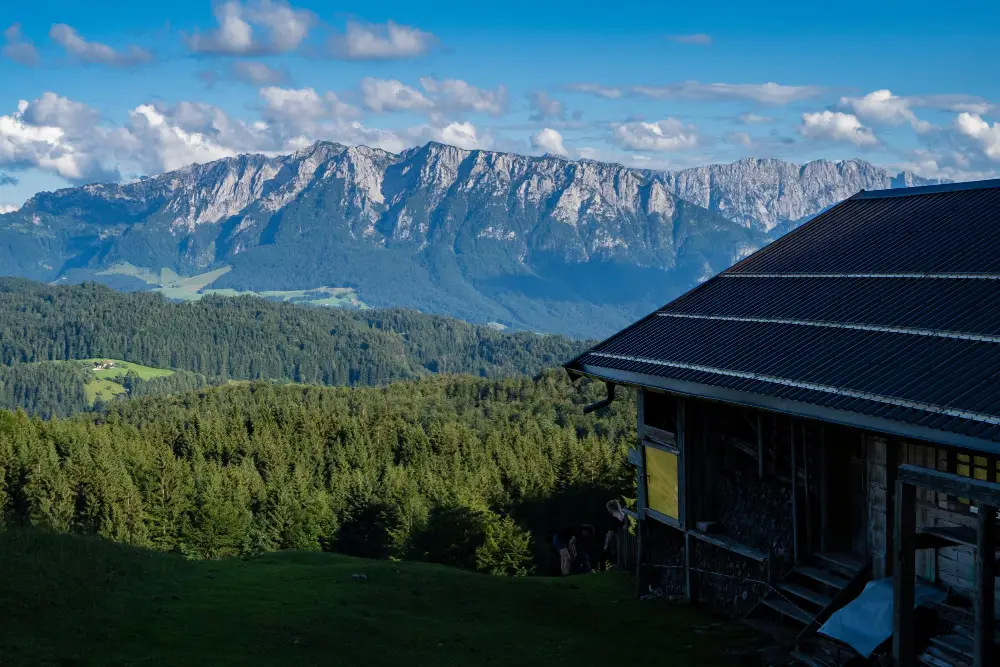
Energy-Efficient Features in Luxury Mountain Homes
Energy efficient luxury mountain homes in the Weaverville area and across the Western North Carolina region face a performance environment that the general residential construction market’s standard specifications are not designed for. The elevation, the precipitation loads, the temperature differentials between interior and exterior at mountain elevations during winter months, and the wind exposure that ridge sites experience create thermal and moisture demands on a home’s envelope and mechanical systems that exceed what minimum code compliance addresses.
For clients building luxury custom homes in the Weaverville area, energy efficiency is not a separate design objective to be balanced against other priorities, it is a dimension of construction quality that the specification of every building system in the home either addresses or ignores. A home built to minimum energy code compliance in this climate will consume significantly more energy to maintain comfort than a home whose envelope and mechanical systems are specified for the actual performance demands of the site. That gap in energy consumption represents a real and recurring cost that the client carries across every year of occupancy.
This guide covers the energy-efficient features that luxury mountain homes in the Weaverville area and Western North Carolina should incorporate, what they are, why they matter at mountain elevations, and how they are integrated into the design and construction process at the level this firm operates.
The Envelope: Where Energy Performance Is Won or Lost
The building envelope, the assembly of wall, roof, floor, window, and door systems that separates the conditioned interior from the exterior climate, is where the energy performance of a home is primarily determined. Mechanical systems compensate for what the envelope does not do. A home with a high-performance envelope requires less mechanical system capacity, consumes less energy to maintain comfort, and delivers a more consistent interior environment than a home with a standard envelope supplemented by oversized mechanical equipment.
For energy efficient luxury mountain homes in the Weaverville area, envelope specification begins with the thermal performance requirements of the site, the heating degree days at the home’s elevation, the cooling load during summer months, and the moisture management demands of the Western North Carolina precipitation environment.
Continuous insulation, insulation installed on the exterior face of the structural framing rather than solely within the stud cavities, eliminates the thermal bridging that occurs at every framing member in a standard wall assembly. In a standard stud-framed wall with cavity insulation only, the framing members conduct heat between the interior and the exterior at a rate significantly higher than the insulation beside them. Continuous insulation breaks that thermal bridge and produces a wall assembly whose effective R-value more closely matches its nominal R-value.
Advanced air sealing, the systematic sealing of every penetration, every joint, and every transition in the building envelope, reduces the infiltration load that is one of the primary energy consumers in residential construction at mountain elevations. Air sealing is not a single product or a single installation step, it is a discipline applied throughout the framing, sheathing, and mechanical rough-in phases of construction, requiring coordination between trades and verification through blower door testing after the envelope is complete.
High-performance window systems, windows specified for U-factor and solar heat gain coefficient appropriate to the orientation and elevation of the specific site, deliver thermal performance that standard residential window specifications in the broader market do not approach. For mountain homes in the Weaverville area where winter heating loads dominate the annual energy budget, U-factor is the primary thermal performance criterion, and the difference between a window specified at U-0.30 and one at U-0.20 is a measurable and recurring difference in heating load across every winter of the home’s occupancy.
Mechanical Systems: Right-Sized for the Building They Serve
The mechanical systems of an energy efficient luxury mountain home, heating, cooling, ventilation, and domestic hot water, should be sized and specified for the actual load of the building as designed, not for the maximum load the building could conceivably experience under the most adverse conditions the site might present. Oversized mechanical equipment in residential construction is one of the most consistent sources of occupant comfort complaints and elevated energy consumption, a heating system that is too large for the building it serves cycles on and off frequently, delivering poor dehumidification performance, inconsistent temperatures, and abbreviated equipment life.
High-efficiency heat pumps, specifically cold-climate heat pump systems rated for heating performance at temperatures well below the standard heat pump’s operational range, are the most energy-efficient primary heating and cooling system available for luxury mountain homes in the Weaverville area where the heating season is long and the heating loads are meaningful. Current cold-climate heat pump technology maintains useful heating capacity at outdoor temperatures that would render standard heat pump equipment ineffective, which means the backup resistance heating that older heat pump installations relied on is rarely or never engaged.
Heat recovery ventilation, mechanical ventilation systems that recover heat from the exhaust air stream and transfer it to the incoming fresh air, provide the controlled ventilation that a tightly sealed, high-performance envelope requires while recovering the majority of the energy that ventilation would otherwise exhaust directly to the exterior. In a mountain home in the Weaverville area where winter heating loads are significant, heat recovery ventilation reduces the energy penalty of adequate fresh air ventilation to a fraction of what uncontrolled infiltration or exhaust-only ventilation would impose.
Domestic hot water systems, heat pump water heaters or solar thermal systems with heat pump backup, deliver domestic hot water at a fraction of the energy cost of standard electric resistance water heaters. In a luxury custom home where hot water loads may include a steam shower, a soaking tub, radiant floor heating, and multiple bathrooms, the domestic hot water system’s efficiency is a meaningful contributor to the home’s total energy consumption.
Thermal Mass & Passive Solar Design
The site conditions of luxury mountain homes in the Weaverville area, the orientation opportunities that ridge sites provide, the solar access available at elevation above the valley fog and cloud layer that the Asheville basin experiences in winter months, create passive solar design opportunities that are most effectively captured in the design phase when the floor plan, the window placement, and the thermal mass distribution within the home are still being developed.
Thermal mass, the use of materials with high heat storage capacity, such as concrete floors, stone features, or masonry elements, positioned within the conditioned space where they receive direct solar gain through south-facing glazing, captures solar heat during daylight hours and releases it to the interior during the evening and nighttime heating period. In a mountain home with good south solar exposure during the heating season, passive solar design integrated into the floor plan can meaningfully reduce the active heating load the mechanical system must carry.
This is a design-phase decision, thermal mass and passive solar strategies must be incorporated into the floor plan and the window placement before the architectural documentation is finalized. They cannot be added to a completed design as a post-hoc energy strategy.
Moisture Management as an Energy Strategy
At the elevations and precipitation loads that luxury mountain homes in the Weaverville area experience, moisture management within the building envelope is both a durability concern and an energy performance concern. A wall assembly that allows moisture accumulation within the insulation layer has effective R-values substantially lower than its nominal values, wet insulation does not perform at its rated thermal resistance.
The moisture management strategy for a mountain home’s wall assembly, the placement of vapor retarders, the detailing of drainage planes, the specification of materials with appropriate vapor permeability for their position within the assembly, is a building science decision that must be coordinated with the thermal performance specifications of the assembly in the design phase. A wall assembly that achieves excellent air sealing but manages vapor incorrectly for the climate zone creates moisture accumulation conditions that degrade both the thermal performance and the structural durability of the assembly over time.
Black Rabbit specifies wall assemblies for Weaverville-area custom homes with both thermal performance and moisture management governing the specification, not one at the expense of the other.
The Integration Advantage of Design-Build
Energy efficient luxury mountain homes are most effectively designed and built by a firm whose design team and construction team are the same, because the energy performance of the finished home is determined by decisions made across both the design phase and the construction phase, and those decisions must be coordinated in ways that separate design and construction firms routinely fail to achieve.
An air sealing strategy developed in the design phase is only as effective as the trades executing the seal in the field. A thermal mass design strategy is only effective if the slab or stone element is positioned and sized according to the design documentation. A window specification that targets a specific U-factor is only effective if the installation method and the flashing detail that protects the window’s thermal performance at the frame-to-wall junction are executed to the standard the design assumed.
Under the Black Rabbit unified contract, the team that specified the air sealing strategy is the team managing the installation. The team that produced the passive solar floor plan is the team coordinating the slab placement. The team that specified the window performance requirements is the team managing the installation and the flashing detail. That integration is the operational foundation of energy efficient luxury mountain homes that actually perform at the level their specifications describe.
Localized Advice for Weaverville-Area Clients
Energy efficient luxury mountain homes in the Weaverville area benefit most from envelope investments, continuous insulation, advanced air sealing, and high-performance windows, because the heating season in northern Buncombe County is long enough and cold enough at mountain elevations that the envelope’s performance directly and consistently affects occupant comfort and energy cost across every winter of the home’s life. Mechanical system efficiency matters, but it matters most when the envelope it is serving has been specified to minimize the load the system must carry.
The energy performance strategy for a specific custom home in the Weaverville area is most productively developed in the Discovery and Design phases, when the site conditions, the orientation opportunities, and the architectural program are known and the specifications that address all three can be developed together.
FAQ
Do energy-efficient features add significantly to the construction cost of a luxury mountain home?
The incremental cost of high-performance envelope specifications, continuous insulation, advanced air sealing, and upgraded windows, relative to standard construction is typically in the range of five to ten percent of the total construction cost. That incremental investment produces recurring energy savings across the life of the home and a measurably better interior comfort environment, making it one of the highest-return specification investments available in luxury mountain home construction.
What is the most impactful single energy improvement for a mountain home in the Weaverville area?
Advanced air sealing consistently delivers the highest energy performance return per dollar invested in the Weaverville climate, because uncontrolled air infiltration is the primary energy loss mechanism in residential construction and because the labor cost of thorough air sealing during construction is modest relative to the recurring energy savings it produces.
Does Black Rabbit incorporate energy performance specifications into every custom home project?
Yes. Envelope performance, mechanical system sizing and specification, and moisture management are addressed in the design documentation for every custom home project this firm takes on. Energy performance is a dimension of construction quality, not an elective upgrade.
Can energy-efficient features be incorporated into a renovation of an existing Weaverville-area home?
Yes. Existing homes can be substantially improved in thermal performance through wall insulation improvements, attic air sealing and insulation, window replacement, and mechanical system upgrades. The renovation scope for energy improvements is developed based on the existing conditions assessment of the specific home.
Build the Home the Mountain Climate Demands
Energy efficient luxury mountain homes in the Weaverville area are built from the envelope outward, with specifications developed for the actual performance demands of the site, coordinated between a design team and a construction team that are the same organization. Black Rabbit Construction accepts a limited number of projects each year and begins every one with the Discovery Phase that grounds the energy performance strategy in the specific conditions of the specific site.
Request Your Private Consultation → Start Your Discovery Phase → Discuss Your Project →