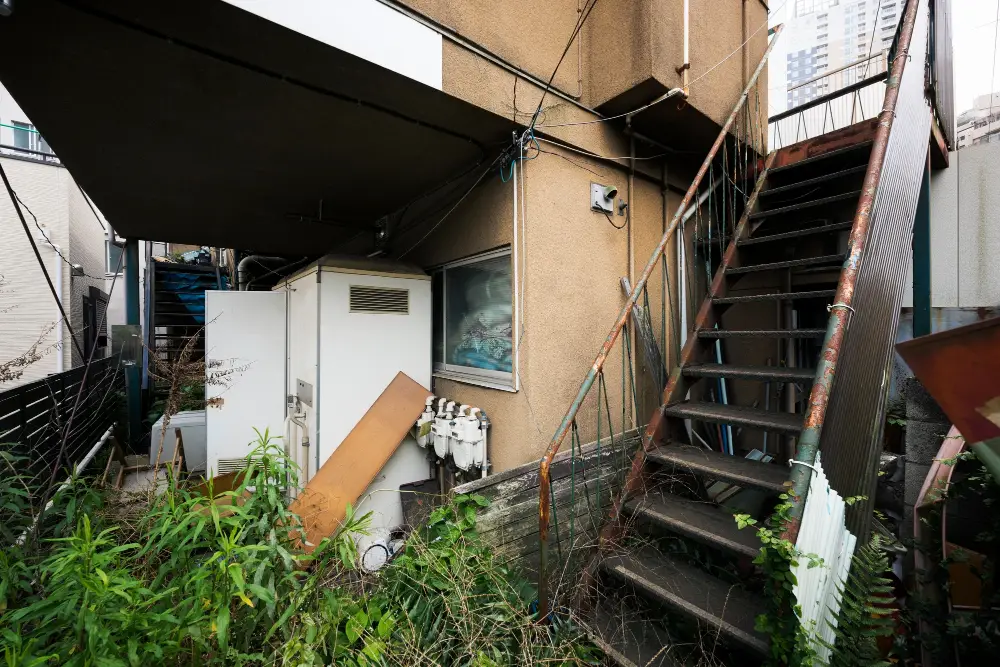
Structural Risks Hidden in Older Weaverville Homes
The older homes in and around Weaverville carry a character and a presence that many clients find more compelling than anything a production builder can deliver today. The framing proportions, the site relationships, the material quality of the lumber cut from old-growth timber, and the architectural details of homes built in the mid-twentieth century and earlier reflect a standard of residential construction that the volume production model has not replicated.
What those homes also carry, behind the walls, beneath the floors, in the crawl spaces, and within the structural systems that have been performing under load for fifty, seventy, or a hundred years, are structural issues that older Weaverville homes present with a regularity that any firm with genuine renovation experience in this area has encountered across a wide range of project types. Some of those conditions are cosmetic. Others are structural risks that affect the safety, the performance, and the long-term value of the property in ways that are not visible from a standard home inspection and not quantifiable without the kind of existing conditions assessment that a design-build firm conducts before a renovation scope is developed.
This guide covers the most common structural risks hidden in older Weaverville homes, what they are, why they develop, and what they mean for clients who are purchasing or renovating an older property in this area.
Risk One: Deteriorated Crawl Space Framing
The majority of older homes in the Weaverville area were built on crawl space foundations, a foundation type that made practical sense in the era when these homes were constructed and that remains appropriate for this region today when it is properly detailed and maintained. The problem is that crawl spaces in older Weaverville homes are frequently not properly detailed and have not been adequately maintained across the decades they have been in service.
The combination of the Western North Carolina climate, significant precipitation, seasonal humidity swings, and the potential for standing water during sustained rain events, and the crawl space conditions common to older construction in this area creates an environment where wood decay, insect damage, and moisture-driven structural deterioration develop over time. The floor joists, sill plates, and girder beams that carry the floor load of the home sit within the crawl space environment and are directly exposed to whatever moisture conditions that environment sustains.
Structural issues older Weaverville homes present in the crawl space range from soft spots in the floor above areas of localized joist decay to complete failure of sill plates that have been in contact with moisture-saturated concrete or masonry for decades, to girder beams that have been compromised by fungal decay or insect activity to the point where their structural capacity is a fraction of what the design assumed.
These conditions are not always apparent from above the floor or from a visual inspection of the crawl space from the access opening. They require physical access to the crawl space, direct inspection of the framing members, and in some cases probing of suspect members to confirm the depth of deterioration. A design-build firm conducting an existing conditions assessment on an older Weaverville home before a renovation scope is developed will access the crawl space and document what is there, a step that a standard home inspection does not consistently provide at this level of detail.
Risk Two: Undersized or Compromised Load-Bearing Members
The structural framing of older homes in the Weaverville area was designed under building codes and engineering standards that differed from current requirements, sometimes substantially. Beams that were sized for the loads anticipated by the design standards of their era may be undersized for the loads the home has accumulated over decades of use, modification, and the addition of mechanical equipment, insulation, and finish materials not contemplated in the original design.
More significantly, load-bearing members in older Weaverville homes are frequently not where a renovation client, or a general contractor without structural assessment experience, would assume them to be. The load paths in platform-framed homes of different eras do not always follow the patterns that current construction establishes as standard. A wall that appears to be a non-structural partition may be carrying a point load from a beam above. A beam that appears to be a primary structural member may have had its bearing conditions compromised by a previous modification that removed part of its support.
Load bearing wall removals in older Weaverville homes carried out without a structural assessment of the existing framing and the load paths it carries are one of the most consistent sources of structural problems in the area’s renovation market. The consequences range from floor deflection that develops over months after the renovation is complete to visible racking of adjacent walls and door and window frames that open and close correctly on the day of completion and do not within a year.
Black Rabbit conducts a structural assessment of the existing framing before any renovation scope that involves structural modifications is developed. That assessment documents the load paths, identifies the bearing conditions of primary members, and produces the engineering basis for the structural modifications the renovation requires, before any wall is opened.
Risk Three: Foundation Settlement & Movement
The foundations of older homes in the Weaverville area were constructed under conditions that the passage of decades has changed in ways the original construction did not anticipate. Drainage patterns around the foundation may have shifted as the landscape around the home developed. Vegetation whose root systems were distant from the foundation at the time of construction may have grown to positions where they affect the soil bearing conditions beneath the footings. And the construction methods and materials used for foundations in earlier eras, rubble stone foundations, unreinforced concrete block, and poured concrete without modern admixtures, may not have performed as assumed across the service life of the home.
Foundation settlement in older Weaverville homes manifests in ways that are often visible at the finish surface level before they are understood as structural conditions: doors and windows that stick or have been planed to fit conditions that changed over time, floor surfaces that slope in ways not intended by the original design, cracks in plaster or drywall that follow patterns consistent with differential settlement, and exterior masonry or siding that shows movement at the corners and transitions where settlement is most visible.
The distinction between cosmetic cracking that reflects normal long-term movement and cracking that reflects active or ongoing foundation settlement requires professional assessment. A design-build firm examining an older Weaverville home before a renovation scope is developed will evaluate the foundation conditions, including the type of foundation, its current condition, the drainage conditions around it, and the settlement indicators visible at the finish surfaces, and document what the findings mean for the renovation program.
Risk Four: Previous Modifications Without Permits or Engineering
Older homes in the Weaverville area have frequently been modified over the decades since their original construction, additions added, rooms reconfigured, structural members removed or relocated, and not all of those modifications were performed with permits, with engineering, or with the structural awareness that the modifications required.
Unpermitted additions on older Weaverville homes are a consistent source of structural surprise during renovation. An addition built without a permit was built without a foundation inspection, a framing inspection, or the review of the structural connections between the addition and the primary home that the permitting process requires. The connection between an unpermitted addition and the primary structure, the point where the two meet at the foundation, at the wall framing, and at the roof, is where the structural deficiencies of unpermitted construction most consistently appear.
Previous structural modifications, load-bearing walls removed without engineering, beams installed without adequate bearing length at their support points, floor systems opened for mechanical installation without adequate blocking and header framing, are conditions that the existing conditions assessment documents and that the renovation design must address before construction begins. Discovering them during demolition, rather than before the renovation scope is developed and priced, is one of the most reliable sources of renovation budget overruns.
Risk Five: Deteriorated Roof Structure
The roof structures of older homes in the Weaverville area have been performing under the precipitation loads, wind conditions, and snow loads of the southern Appalachian climate for decades, and in many cases, they have been doing so with maintenance histories that are incomplete or undocumented. Rafter framing that has experienced moisture infiltration at a failed flashing detail for years develops decay that is not visible from the attic floor or from a standard home inspection that does not include physical inspection of every rafter bay.
Ridge beams in older homes that were undersized for the spans they carry have deflected over time, producing the characteristic ridge sag that is visible from the exterior as a bow in the roofline but whose structural implications go beyond the aesthetic condition visible from the ground. Collar ties and ridge board connections in older rafter-framed roofs that have been compromised by decay, insect activity, or previous modifications may no longer be providing the lateral resistance to outward thrust that the roof system requires.
For clients renovating older Weaverville homes whose renovation scope includes any work in or adjacent to the attic space, insulation upgrades, mechanical system modifications, dormers, or roof surface replacement, a thorough assessment of the existing roof structure is part of the existing conditions documentation this firm produces before renovation design begins.
Risk Six: Outdated Mechanical Systems Within Structural Cavities
The mechanical systems of older homes in the Weaverville area, plumbing, electrical, and HVAC, were installed in an era whose standards, materials, and technologies differ significantly from current practice. What makes these systems a structural risk as well as a performance concern is the way they interact with the structural framing that houses them.
Plumbing supply lines in older Weaverville homes may be galvanized steel that has corroded from the inside and is approaching or past the end of its service life, a condition that produces leaks within structural wall cavities that cause wood decay and mold growth long before the leak becomes visible at a finish surface. Electrical wiring in homes built before current electrical code, knob-and-tube wiring, early aluminum wiring, may have been modified multiple times over the decades, with each modification adding a layer of non-standard connections within the wall cavities.
For renovation projects on older Weaverville homes that involve opening walls for any purpose, the mechanical systems within those walls are evaluated as part of the existing conditions assessment and the renovation scope is developed with awareness of what the open walls reveal, not as a surprise discovered after the project is committed to a scope and a budget.
Localized Advice for Weaverville Area Buyers & Renovation Clients
Clients purchasing or renovating older homes in the Weaverville area, particularly properties built before 1970, should approach the existing conditions assessment as a non-negotiable first phase of the project rather than as a preliminary step that can be abbreviated in the interest of moving quickly to the renovation scope and the design work. The structural issues older Weaverville homes present are manageable, this firm has renovated homes with all of the conditions described in this guide and produced finished projects that perform at the luxury standard the investment demands. But they are only manageable when they are identified and documented before the renovation scope is committed to, the budget is set, and the construction schedule begins.
Discovery Phase consultations for renovation projects on older Weaverville-area properties are available on a limited annual basis.
FAQ
Does a standard home inspection identify the structural risks described in this guide?
A standard home inspection identifies visible and accessible conditions at the time of inspection. It does not typically include physical access to every crawl space bay, probing of suspect framing members, structural load path analysis, or assessment of the engineering adequacy of existing structural members and connections. The existing conditions assessment a design-build firm conducts before a renovation scope is developed is more thorough than a standard home inspection and is specifically focused on the conditions that affect the renovation scope and the structural performance of the finished project.
How much does it typically cost to remediate structural issues in an older Weaverville home?
Remediation costs depend on the scope and severity of the conditions found. Crawl space framing remediation ranges from modest repairs of localized decay to full sill plate and joist replacement that represents a significant construction cost. Foundation remediation costs vary based on the type of foundation and the extent of the settlement condition. These costs are quantified in the existing conditions assessment phase before the renovation scope is committed to.
Can a home with significant structural issues be successfully renovated at the luxury level?
In most cases, yes. The structural conditions that older Weaverville homes present are addressable with the right design and construction approach. The assessment phase determines what the remediation scope requires and whether the total project cost, remediation plus renovation, is proportionate to the finished value of the property.
Should structural conditions affect a purchase decision on an older Weaverville home?
Significant undisclosed structural conditions that are discovered after purchase can substantially affect the renovation budget and the project scope. Commissioning an existing conditions assessment before a purchase is finalized, or making the purchase contingent on the findings of that assessment, gives the buyer the information they need to negotiate appropriately or to decline a purchase whose conditions do not support the intended renovation at the intended budget.
Know What Is Behind the Walls Before You Commit
The structural issues older Weaverville homes carry are identifiable before a purchase is finalized and before a renovation scope is committed to, if the right assessment is conducted at the right time. Black Rabbit Construction’s existing conditions assessment is the starting point for every renovation project this firm takes on, and Discovery Phase consultations are available on a limited annual basis.
Request Your Private Consultation → Start Your Discovery Phase → Discuss Your Project →