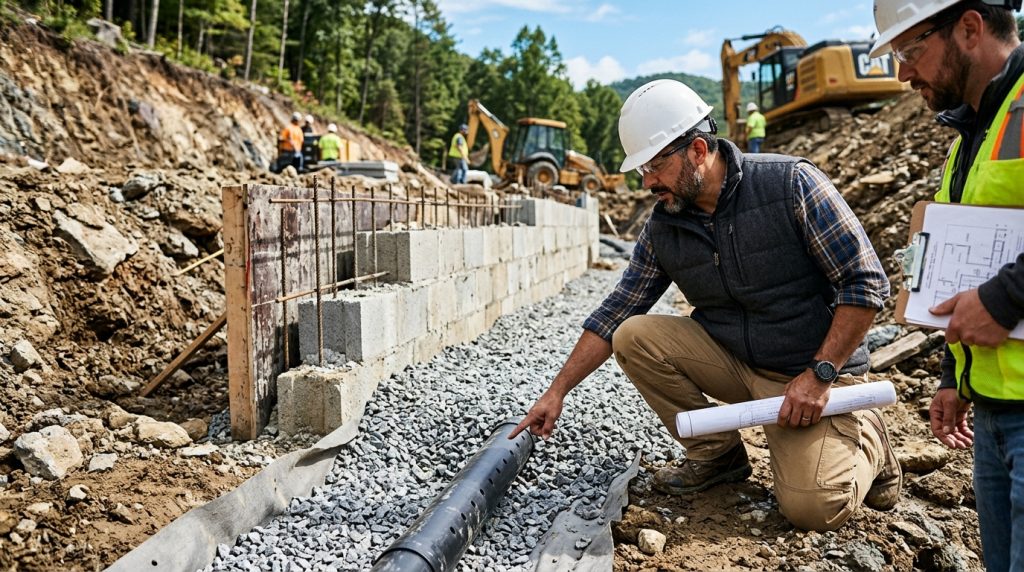
A retaining wall looks like a simple thing. It holds back a slope, creates level ground, and gives a property usable space where the grade would otherwise make it impossible. Yet retaining walls fail more often than almost any other structure on a property, and when they do, the cause is nearly always the same. The problem is rarely the wall itself. The problem is the water behind it.
Retaining wall drainage is the part of the structure that most homeowners never see and that decides how long the wall will last. A wall built with proper drainage can hold a slope for decades. A wall built without it can bulge, lean, and give way within a few years, no matter how solid it looked the day it was finished. This article explains why drainage matters so much, how it works, and what it means for anyone building a retaining wall in North Carolina.
Why Water Is the Real Threat
Soil holds water, and water is heavy. When rain falls or runoff moves down a slope, the soil behind a retaining wall soaks it up, and that water adds enormous pressure against the back of the wall. Engineers call this hydrostatic pressure, and it is the force that destroys most walls that fail.
A retaining wall is designed to hold back soil, but soil saturated with water weighs far more and pushes far harder than dry soil does. When the water behind a wall has nowhere to go, the pressure builds until the wall can no longer hold it, and the wall begins to move. This is why retaining wall drainage matters more than almost any other part of the design. The wall is only holding back soil, but the water is what breaks it.
How Proper Drainage Protects a Wall
Good retaining wall drainage gives the water a path to escape before it can build up behind the wall. When the water can move away freely, the pressure never reaches the level that would move the wall, and the structure holds. A few elements work together to make that happen.
Gravel Backfill
Behind a well-built wall sits a zone of gravel rather than soil. Gravel lets water move through it freely, so instead of soaking into dense soil and adding pressure, the water drains down through the gravel toward the base of the wall. This backfill is the first line of defense, and a wall built without it loses much of its ability to shed water.
Drainage Pipe
At the base of the wall, a perforated pipe collects the water that drains down through the gravel and carries it away from the wall entirely. This pipe, often called a French drain, is what moves the water off the property or to a safe outlet rather than letting it pool at the base. Without it, the water simply collects at the bottom of the wall and works its way back into the soil.
Grading & Surface Water
Drainage does not stop behind the wall. The ground above and around the wall has to be graded so that surface water runs away from the structure rather than toward it. Good grading keeps much of the water from ever reaching the soil behind the wall, which reduces the load the drainage system has to handle.
Why Drainage Is Planned With the Wall
The reason retaining wall drainage has to be planned from the start is that most of it is built into the wall as it goes up. The gravel backfill, the drainage pipe, and the grading are all installed during construction, behind and beneath the finished surface. They cannot be added later without taking the wall apart, which means a wall built without proper drainage is a wall that will eventually have to be rebuilt.
This is why we treat drainage as part of the structure rather than an afterthought. Our discovery phase begins before any design work, and it includes reading the slope, the soil, and the way water moves across the site, so the wall and its drainage are designed together. Because we take a limited number of projects each year, each site receives the attention this coordination requires, and a private consultation comes before we schedule anything.
The Signs a Wall Is Failing From Water
A retaining wall usually shows that its drainage has failed before it collapses, and the signs are worth recognizing early. A wall that begins to lean or bulge outward is being pushed by water pressure it can no longer resist. Cracks that open across the face of the wall point to the same cause. Water that seeps through the wall or pools at its base after rain is a clear sign that the drainage behind it is not carrying the water away. When these signs appear, the wall is telling you that the retaining wall drainage is not working, and the longer it goes unaddressed, the closer the wall moves to failing entirely.
Retaining Walls in the North Carolina Mountains
In the mountains of North Carolina, retaining wall drainage matters even more than it does on flat ground. The slopes are steeper, which sends more water toward the walls, and the heavy mountain rain saturates the soil quickly. The freeze and thaw cycle adds another force, because water that gets into the soil and freezes expands and pushes against the wall through the winter.
For these reasons, a retaining wall in the mountains has to be engineered and drained for real conditions rather than built as a simple stack of block or stone. A wall that ignores the water will not survive the first few hard seasons, while a wall built with proper drainage will hold the slope for decades. The material of the wall matters, but the drainage behind it is what decides how long it lasts.
Frequently Asked Questions
Why Do Most Retaining Walls Fail?
Most retaining walls fail because of water building up behind them rather than because of the material they are made from. When the water has nowhere to go, the pressure it creates pushes the wall until it bulges, leans, or gives way. A wall with proper drainage rarely fails for this reason, which is why drainage is the most important part of the design.
Can Drainage Be Added to an Existing Wall?
It is difficult, because most of the drainage is built behind and beneath the wall during construction. Adding it later usually means excavating behind the wall or rebuilding it, which is expensive and disruptive. This is why proper drainage is far cheaper to build in from the start than to correct after a wall begins to fail.
Does the Type of Wall Matter More Than the Drainage?
The drainage matters more. A wall built from any sound material will last when it is drained properly, and a wall built from the best material will fail when it is not. The material affects the look, the height, and the cost, but the drainage behind it is what determines how long the wall stands.
Building a Wall That Lasts
A retaining wall is only as good as the drainage behind it. The wall holds back the soil, but the water is what threatens it, and a wall built without a path for that water to escape is a wall on borrowed time. Proper retaining wall drainage, built in during construction and matched to the slope and the soil, is what lets a wall hold its ground for decades.
If you are planning a retaining wall on a sloped property in North Carolina, reach out to Black Rabbit Construction for a private consultation. Tell us about your site and what you are trying to hold or level, and we will walk through the drainage and the design that would give your wall a long life.