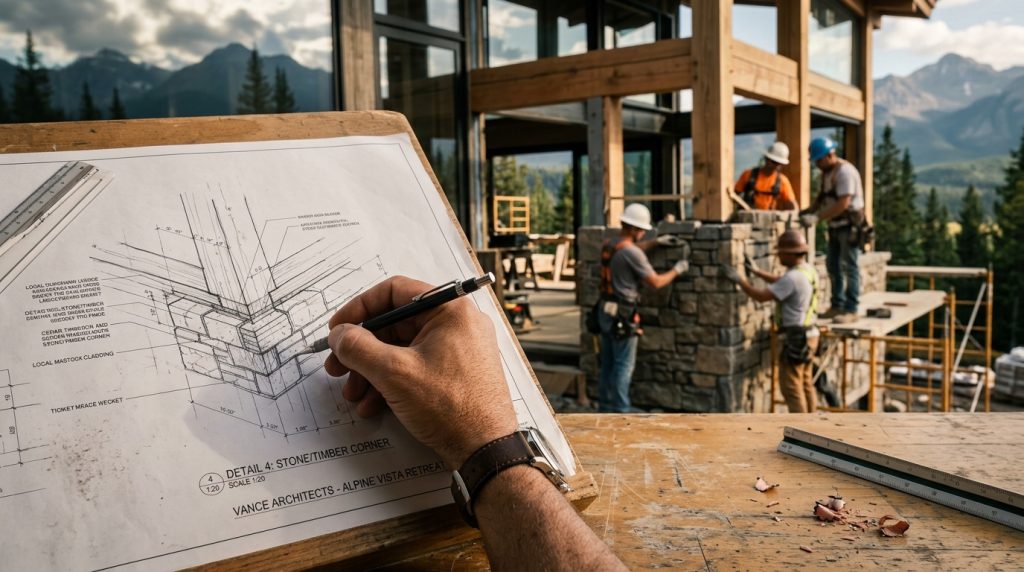
On most custom homes, the architecture and the construction are two separate agreements with two separate companies. The homeowner hires an architect to design the home, then hires a builder to construct it, and the two are brought together only after the design is finished. It is the traditional way to build, and it is also the source of many of the problems that make building a home stressful and expensive.
We work differently. We handle the architecture and the construction under one contract, with one team responsible for both the design and the build from start to finish. This is not a small detail of how we operate. It changes the entire experience of building a home, and it removes the gap where most of the trouble on a project tends to hide. This article explains how we coordinate the two and why it produces a better home.
The Problem With Two Separate Contracts
When the architecture and the construction are separate agreements, a seam runs down the middle of the project, and things fall into it. The architect designs the home without full knowledge of what it will cost to build, and the builder prices a design he had no hand in shaping. When the two do not match, the design goes back for changes, the schedule stalls, and the budget climbs.
Worse, when a problem appears during construction, the separation invites finger-pointing. The builder says the design caused it, the architect says the build did, and the homeowner is left in the middle, paying for the gap between them. Handling the architecture and construction under one contract closes that gap entirely, because there is no seam for the problem to fall into. One team is responsible for both sides, so there is no one to point at and nothing to fall between.
How One Contract Changes the Work
Bringing the architecture and the construction together under one team changes how the whole project runs, and it changes it for the better in a few specific ways.
The Design Is Drawn to Be Built
When the people who will build the home are part of the design from the start, the home is designed to be built well and within the budget. Nothing gets drawn that cannot be executed cleanly, and the cost is understood as the design develops rather than discovered after it is finished. The design and the budget move together, so the home that is drawn is the home that gets built.
One Team Owns the Result
With the architecture and construction handled together, one team is accountable for the finished home. There is no gap between designer and builder, no dispute over who is responsible when a question arises, and no homeowner caught between two companies. The owner deals with one team that answers for the whole result, which is a very different experience from managing two.
Decisions Happen Faster
When a question comes up during the build, and questions always do, the answer does not require a negotiation between two separate companies. The team that designed the home is the team building it, so decisions get made quickly and in keeping with the original intent. This keeps the project moving and keeps the design from eroding as the build goes on.
What This Means for the Homeowner
For the person building the home, the difference between one contract and two is felt throughout the project. With two separate agreements, the homeowner becomes the link between the architect and the builder, carrying questions back and forth, mediating disagreements, and absorbing the cost whenever the two do not align. It is a role most people do not expect to play when they set out to build a home, and it is one of the main reasons building has a reputation for being stressful.
Under a single agreement, that burden disappears. The homeowner has one team to talk to, one point of accountability, and one group that answers for both the design and the build. Questions are resolved within that team rather than negotiated across a divide, and the owner is free to make decisions about the home rather than manage the relationship between two companies. The experience is calmer and clearer, and the home benefits from it, because the energy that would have gone into coordination goes into the work instead.
The schedule tends to hold for the same reason. When the design and the construction are planned by the same team, the sequence is understood from the beginning, and the delays that come from a design and a build that do not match are largely removed before they can occur.
Why This Protects the Design
A home is designed with an intent, and that intent is fragile once construction begins. When the design and the build are separate, the intent tends to erode. Details get simplified to save money, and the ideas that made the design work get lost in the handoff between the architect and the builder.
Holding the architecture and construction together protects that intent, because the people who conceived the home are the ones carrying it out. The connection to the land, the proportions, and the details that make the home what it is all survive the build, because no one hands the design to a stranger to interpret. Our discovery phase begins before any design work, and because we take a limited number of projects each year, each home receives the continuity this approach requires. A private consultation comes before we schedule anything.
Frequently Asked Questions
What Does It Mean to Build Under One Contract?
It means one team handles both the architecture and the construction of the home under a single agreement, rather than the homeowner hiring a separate architect and builder. The design and the build are the responsibility of the same team from start to finish, which removes the gap that usually sits between the two.
Does One Contract Cost More Than Hiring Separately?
It often costs less over the life of the project, because it removes the change orders, delays, and disputes that arise when a design and a build do not match. The design is drawn to be built within the budget, and problems do not fall into a gap between two companies. The savings come from what the approach prevents rather than from a lower starting price.
How Does One Contract Protect the Design?
It keeps the people who designed the home in charge of building it, so the intent behind the design survives construction. The proportions, the details, and the connection to the land are carried out by the team that conceived them, rather than handed to a separate builder to interpret. The home that is drawn is the home that gets built.
Building Without the Gap
Handling the architecture and the construction under a single agreement removes the seam where most of the trouble on a custom home tends to hide. The design is drawn to be built, one team is accountable for the result, decisions happen quickly, and the intent behind the home survives all the way to the finished house. For the homeowner, it means building with one team rather than refereeing two. It is a simpler way to build, and it produces a home that more closely matches what the owner set out to create.
If you are planning a custom home in Western North Carolina and want the design and the build handled as one, reach out to Black Rabbit Construction for a private consultation. Tell us about your project, and we will walk through how we coordinate the architecture and the construction under one contract from start to finish.