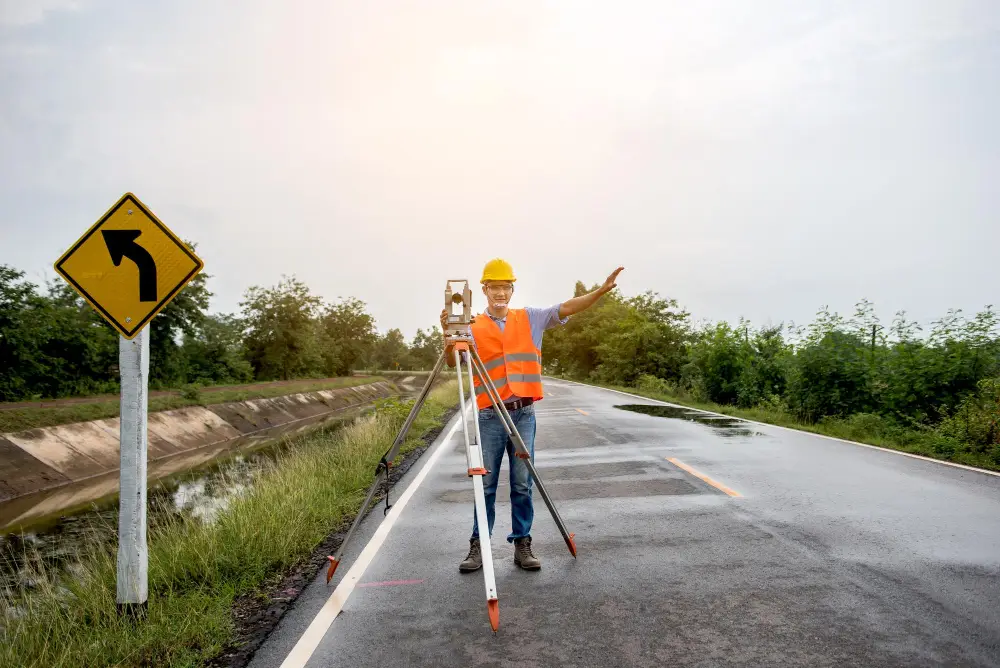
Every rural home starts with a way to reach it. Before the trucks can deliver materials, before the equipment can dig a foundation, before you can pull up to your own front door, there has to be a road. On a rural mountain property that road is not a short strip of pavement at the end of a public street. It is a piece of infrastructure that can run hundreds of feet, climb real grade, cross drainage, and carry heavy loads for the life of the property.
Rural access road construction NC owners take on is one of the first things built and one of the most underestimated. People budget for the home and treat the road as an afterthought, then find that the way in is a large project of its own. Get it right and the road serves the property for decades. Get it wrong and it washes out, fails under load, or cuts you off from your own home in bad weather. Here is how to plan the way in the right way.
Why a Rural Access Road Is Real Infrastructure
A driveway in town connects a short distance to a maintained public road on flat, prepared ground. A rural access road does something much harder. It has to carry construction equipment during the build, then daily and service vehicles for the life of the home, across whatever length, grade, and terrain the property has.
That is why rural access road construction NC sites require more than grading a path and laying a surface. The road is engineered infrastructure. It has to hold up under the weight of loaded trucks, shed water so it does not erode, and stay usable through mountain winters. A road that was not built for those demands becomes a recurring repair, and on a long rural drive that repair is expensive every time.
Planning the Route First
The road starts with the route, and the route is a decision, not a given. The shortest line from the road to the home is rarely the best one.
A good route balances grade, drainage, and distance. A path that is too steep is hard to build, hard to drive in winter, and hard on the surface. A path that ignores where water flows will fight drainage for its whole life. The route also has to reach the home where the home actually sits, which ties the road planning to the site work and the home placement. Rural access road construction NC projects begin by working out the route that gives a usable grade, sound drainage, and a reasonable distance all at once, which is why the road is planned with the site rather than added at the end.
This is also why the discovery phase begins before any design work. Reading the land tells us where the road can run, how steep it has to be, and where the water crosses it, before anything is committed.
Managing Grade
Grade is the first thing a mountain road has to solve. A road that climbs too sharply is a problem in every season, and it puts more load on the surface and the drainage.
Good rural access road construction NC builders handle keeps the grade within a usable range by planning the route to work with the terrain, cutting and filling where needed to ease the steepest sections, and building the road wide enough and banked correctly for the vehicles it carries. On a long climb to a home on a ridge, the grade decides how the road drives and how well it holds up, which is why it is worked out early rather than left to where the path happens to fall.
Building the Road to Last
A road is only as good as what is under the surface. The part you see is the least of it.
The Base
Under any road surface is the base, the layered and compacted material that carries the load. This is what keeps the road from settling, rutting, and failing under the weight of trucks and equipment. A road built on a weak or thin base fails early no matter what surface sits on top. Rural access road construction NC properties depend on gets the base right first, because the base does the real work.
Drainage & Culverts
Water is what destroys roads, especially on a grade. So the road is built to move water off it and across it without erosion. That means crowning or sloping the surface so water sheds rather than sits, ditches that carry water alongside the road, and culverts that let water cross under the road where streams and runoff need to pass. On a mountain property with real rain and real slope, this drainage work is not optional. Rural access road construction NC sites require culverts and ditches sized for the water the land actually moves, because a road that dams or channels water in the wrong place erodes itself and the property around it.
The Surface
The surface goes on last, over a sound base and good drainage. Gravel is the common rural choice, economical over long runs and easy to maintain. Asphalt and concrete give a finished surface where the grade, the use, or the approach call for it. Many rural roads use gravel for the long run and a firmer surface near the home. The surface matters, but on a rural road it matters less than the base and the drainage under it.
Access for the Build Itself
There is a reason the road usually comes first. The build needs it. Concrete trucks, delivery vehicles, excavators, and cranes all have to reach the site, and they are heavy. A road that cannot carry construction loads stops the project before it starts.
So rural access road construction NC builds sequence the road early, built to carry the heaviest loads the project will see. This protects the schedule, since the trades and deliveries can reach the site, and it protects the road, since a route built for construction loads easily handles daily use afterward. Building the road to the demands of the build is what keeps the rest of the project moving.
Building the Way In Through the Mountains
In Western North Carolina, the terrain makes every part of this harder, and more important.
Slope is the rule, which makes the route, the grade, and the drainage all more involved. The mountain rain and the freeze-thaw climate put real demands on the base and the culverts, since water and ice work on a road year round. Rocky and clay-heavy soil affects how the road is cut and how the base is built. And the length of many mountain access roads makes the cost of getting it wrong real, since a failure anywhere along a long road is a long repair. Rural access road construction NC owners in the mountains have to plan the road for these conditions from the start, because the terrain punishes a road that was built casually.
What People Usually Ask About
What a Rural Access Road Costs
It depends on the length, the grade, the terrain, and the drainage the land needs. A short run on gentle ground with simple drainage costs far less than a long, steep road that needs heavy cut and fill and several culverts. The honest number comes from reading the route on the specific property, which is part of the early site evaluation.
When the Access Road Gets Built
In almost every case, before the home. The build needs a road that can carry construction equipment and deliveries, so the road is usually one of the first things built. A route built to carry construction loads then handles daily use easily for the life of the home.
What Makes a Rural Road Fail
Water and a weak base cause most failures. A road with a thin or poorly compacted base ruts and settles under load, and a road without proper drainage erodes as water runs down or across it. Building a sound base and real drainage, sized for the water the land moves, is what keeps a rural road standing for decades.
Planning a Road That Holds
Rural access road construction NC properties need is real infrastructure, planned by route, built on a sound base, and drained for the water the land actually moves. It carries the build, then serves the home for the life of the property. Plan the route to work with the grade and the water, build the base to carry the load, and size the drainage for the conditions, and the road holds for decades. Treat it as a strip of surface at the end of the project, and it becomes a repair you revisit every season.
We take a limited number of projects each year, so each site gets that attention, and a private consultation comes before we schedule anything. If you are building on rural land in Western North Carolina, reach out for a private consultation, tell us about your property, and we will walk through the way in that your land actually needs.