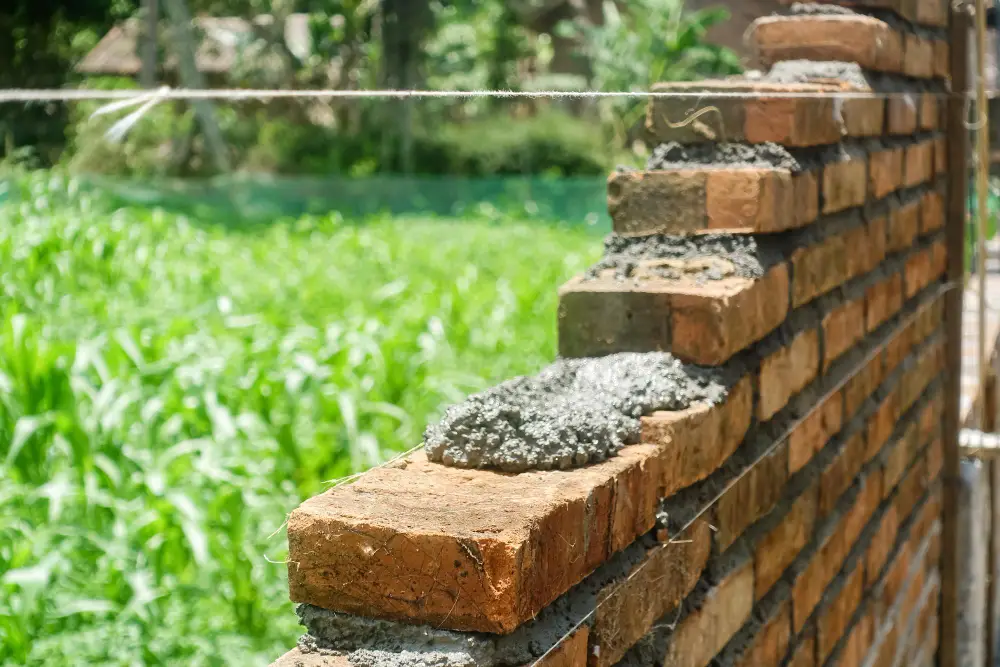
A retaining wall is one of those things people only think about when it fails. Built right, it holds the hillside, manages the water, and disappears into the property as if it had always been there. Built wrong, it bulges, leans, cracks, and eventually gives way, taking part of the slope and your budget with it.
On a sloped lot, the wall is not decoration. It is structure. It holds back soil, controls where water goes, and creates the level ground a home, a driveway, or an outdoor space needs. So the choice of material is not about looks first. It is about what the wall has to do, how much load it carries, and how it handles water over decades. The retaining wall materials sloped lots call for depend on those answers, not on a picture in a catalog.
If you are building or improving on a grade in the mountains, here is how to think about the material choice the right way.
What a Retaining Wall Is Actually Fighting
Before the material, it helps to be clear about the forces a wall on a slope is up against, because those forces decide what the wall has to be.
Soil has weight, and a slope wants to move downhill. A retaining wall holds that mass in place, which means it carries real structural load. The taller the wall and the steeper the grade, the more it carries. Water makes it harder. Rain and runoff build pressure behind a wall, and if that water has nowhere to go, it pushes until something gives. In the mountains, freeze and thaw add a third force, working on the wall and the soil through every winter.
So the retaining wall materials sloped lots need are the ones that can carry the load, manage the water, and ride out the freeze-thaw cycle for the life of the property. A wall that ignores any one of those three will not last, no matter how good it looks the day it goes in.
The Main Material Choices
Each material has a place. The right one depends on the height of the wall, the load it carries, the look you want, and the conditions of the site.
Poured Concrete
Poured concrete is the workhorse for taller walls and heavier loads. It is strong, it can be engineered to carry significant force, and it handles height that other materials cannot. It can be finished with stone veneer or texture so it does not read as a bare wall. For the tallest and most demanding walls, poured concrete is often the material that does the job, and many of the retaining wall materials sloped lots rely on for serious height come back to it.
The tradeoff is that it is the most involved to build. It calls for forms, reinforcement, proper footings, and engineering, which makes it a larger job than a stacked system. For a wall doing real structural work, that effort is the point.
Natural Stone
Natural stone is the material people picture when they imagine a mountain property. It fits the setting, it ages well, and a well-built stone wall looks like it belongs to the land. For walls in the right height range, it offers strength and a look that the other options cannot match.
The cost is craft and money. A proper stone wall takes skilled hands to build correctly, and the material and labor both carry a premium. For walls where the look matters as much as the function, it is often worth it. Among the retaining wall materials sloped lots in the mountains use, stone is the one chosen as much for character as for performance.
Engineered Block Systems
Engineered block, sometimes called segmental retaining wall block, is a manufactured system built to interlock and carry load. It comes in a range of looks, it installs faster than poured concrete or hand-laid stone, and for low to medium height walls it offers strength at a reasonable cost. For many sloped lots, it is the practical middle ground.
The limits are height and look. Block systems work best within a certain height range, above which the engineering points back toward concrete. And while the look has come a long way, some clients still prefer the character of natural stone for a home where appearance leads. Still, for a lot of situations, engineered block is among the most sensible retaining wall materials sloped lots can use.
The Detail That Decides How Long Any Wall Lasts
Here is the part that matters more than the material itself. Drainage. The single most common reason a retaining wall fails is water building up behind it with nowhere to go. Pressure rises, the wall gets pushed beyond what it was built to hold, and it bulges, cracks, or moves.
The retaining wall materials sloped lots use are only as good as the drainage built behind them. That means gravel backfill that lets water move, drainage pipe that carries it away from the wall, and grading that directs surface water where you want it. A cheaper wall with proper drainage will outlast an expensive wall without it. Every time. The material gets the attention, but the water management is what keeps the wall standing.
Choosing for a Mountain Lot
In Western North Carolina, the slope, the water, and the freeze-thaw cycle all push the same direction, toward walls that are engineered, drained, and built for the conditions rather than chosen from a picture.
Taller walls on steep grades usually point toward poured concrete, often with a stone veneer so the strength is hidden behind a look that fits the mountain. Walls where appearance leads, around an entrance or an outdoor living space, often justify natural stone. Lower walls doing practical work around a driveway or a terrace are frequently a good fit for engineered block. And on every one of them, the freeze-thaw climate makes drainage non-negotiable, because trapped water that freezes will move almost anything.
Because retaining walls are structure, not landscaping, they are planned with the build, not added on after. This is part of why the discovery phase begins before any design work. The walls, the grading, and the drainage all have to line up with how the site is developed.
What People Usually Ask About
A few points come up whenever a retaining wall is in the plan.
Which Material Is Best
There is no single best material. The right choice depends on the height of the wall, the load it carries, the look you want, and the conditions of the site. The retaining wall materials sloped lots call for are matched to the job, which is why the evaluation comes before the recommendation.
Why Drainage Matters More Than the Material
Most failed walls failed because of water, not because of the material. A wall with proper drainage behind it lasts. A wall without it does not, regardless of what it is made of. Drainage is where the money is best spent.
How Retaining Walls Fit the Larger Build
On a sloped lot, the walls are part of the site work, tied to grading, drainage, and how the property is developed. We handle them as part of the project rather than as a separate add-on, and we take a limited number of projects each year so each site gets that coordination. A private consultation comes before we schedule anything.
Building a Wall That Holds
A retaining wall on a slope is doing real work, holding back the hillside, managing the water, and making the property usable. The retaining wall materials sloped lots need are the ones matched to the load, the look, and the conditions, built on drainage that keeps water from ever getting the upper hand. Choose well and the wall disappears into the property and holds for decades. Choose poorly and it becomes the most expensive thing on the lot.
If you are building or improving on a grade in Western North Carolina, reach out for a private consultation. Tell us about your lot and what you are planning, and we will walk through the right approach for the walls your site actually needs.