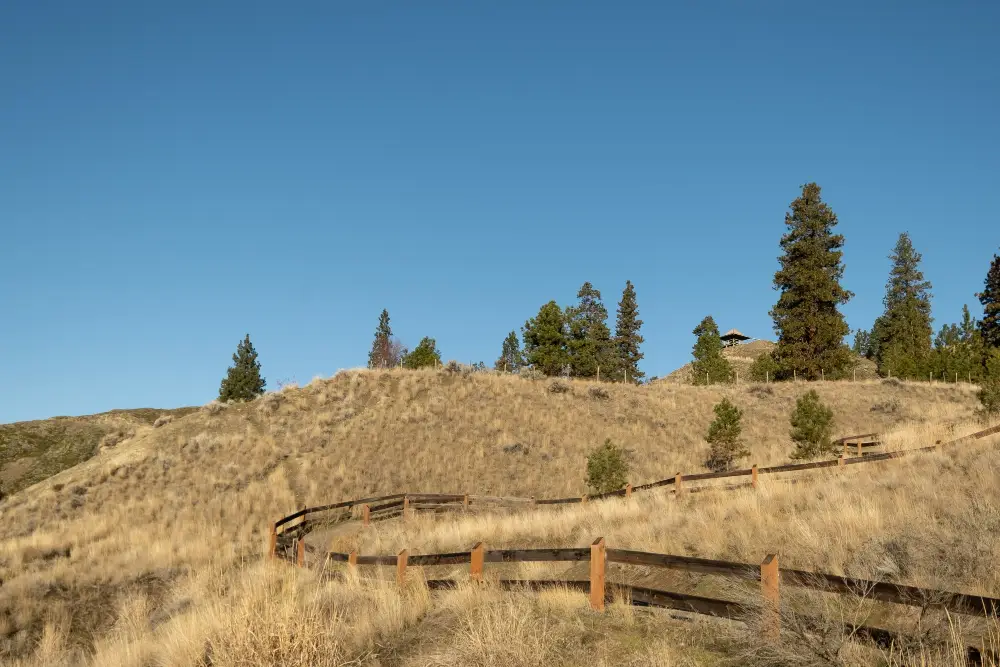
Building on mountain land in NC is one of the most rewarding residential construction experiences available anywhere in the eastern United States, and one of the most consistently misunderstood in terms of what it actually requires.
The terrain that makes Western North Carolina mountain land worth building on is the same terrain that makes building on it more demanding than what most people have experienced in other markets. The slopes, the geology, the seasonal water movement, the climate at elevation, the private infrastructure requirements of rural parcels, all of these conditions are manageable when you approach them with the right process and the right team. They are consistently costly and disruptive when you do not.
This guide covers the full picture of how to build on mountain land in NC, what the process requires, what the conditions demand, and what you need to know before you purchase your parcel or commit to a construction program.
Start With the Land Assessment, Not the Floor Plan
The most important thing to understand about building on mountain land in NC is that the land assessment must precede the design. Not run concurrently with it. Not follow it. Precede it.
This is the step that most people skip or abbreviate, and it is the step whose absence is responsible for the majority of budget surprises, schedule overruns, and project scope problems that mountain land construction projects encounter.
The land assessment documents the specific conditions of the specific parcel that will govern every design decision, every engineering decision, and every construction decision the project involves:
Slope grade & topography — documented through a topographic survey that produces the elevation data the building pad design, the driveway routing, and the grading plan all depend on.
Soil conditions — assessed through soil borings or test pits that document the bearing capacity of the soil, the depth to rock, and the soil classification that affects foundation engineering and septic system design.
Drainage patterns — observed through site visits across different weather conditions that document where water moves during a rain event, where it accumulates, and what the seasonal drainage behavior of the site is.
Utility feasibility — including well yield potential based on neighboring well logs or hydrogeological assessment, septic suitability through soil morphology evaluation, and electrical service access from the nearest distribution line.
Access conditions — the route from the public road to the intended building site, the grades that route must achieve, and the construction logistics that the site’s access conditions will impose on the build.
This assessment is not a morning site visit. It is a structured evaluation that produces documented findings, findings that make the design, the engineering, and the budget that follow it accurate rather than assumed.
Discovery phase begins before design on every project. Private consultation is required before any project is scheduled, and the number of projects accepted each year is limited to ensure every client receives the full attention this process requires.
Knowing the Infrastructure Requirements
Most mountain land parcels in Western North Carolina that attract buyers for custom home or cabin construction are on private land without municipal utility connections. Building on that land means installing the full infrastructure package before the primary structure can be built and occupied.
Private Well
Well drilling depth and yield on mountain land in NC are influenced by the Appalachian geology of the region, which creates significant variation in aquifer conditions across short horizontal distances. Neighboring property well logs provide a useful reference for expected drilling depth in a specific area, but they do not guarantee what a new well on an adjacent parcel will produce.
Budget $8,000 to $20,000 or more for well installation on mountain land in Western North Carolina. If the first drilling location does not reach adequate yield, a second location adds to that cost.
Septic System
Septic system installation on mountain land involves soil evaluation, system design, county health department review, and field installation, a process that takes time and requires professional involvement at every stage.
Conventional septic systems on mountain land in NC run $15,000 to $40,000. Parcels where the soil conditions do not support conventional absorption, a more common condition on steep or clay-bearing mountain land than buyers expect, require alternative system designs that run $40,000 to $80,000 or more. The septic suitability of a specific parcel is determinable before purchase through soil evaluation. Getting that evaluation done before you buy the land is one of the most valuable steps in the entire process.
Driveway Construction
The driveway from the public road to the building site on mountain land in NC is a construction project, not a grading job. Grade management, drainage structures, base material installation, and surface specification are all part of a properly built mountain driveway that works for residential use across decades and handles construction traffic across the build period.
Driveway construction on mountain land runs $20,000 to $100,000 or more depending on the length of the route, the grade conditions it must traverse, and the drainage structures the routing requires.
The Site Preparation Scope Before Construction Begins
After the infrastructure is addressed, the building site itself requires preparation before a foundation can be installed. On mountain land in NC, this scope includes:
Land Clearing
Vegetation removal from the building footprint and the construction staging area, trees, stumps, brush, and debris. Clearing costs run $10,000 to $40,000 on mountain land depending on the density of the vegetation and the volume of material to be processed.
Clearing on mountain land should be scoped carefully to retain the natural features, mature trees, drainage paths, natural screening, that define the character of the site. A building pad that clears more than the project requires loses the site character that made the land worth building on.
Grading & Cut-&-Fill
Establishing the building pad at the correct elevation, drainage condition, and stable bearing surface on a sloped mountain site requires cut-and-fill operations whose scale is proportionate to the slope grade.
On moderately sloped mountain land, ten to twenty percent grade, grading costs run $30,000 to $70,000. On steeper slopes above twenty percent, grading costs run $70,000 to $150,000 or more.
Retaining Walls
Building pad edges on sloped mountain sites typically require retaining structures to hold the cut faces stable and to manage the drainage conditions at the pad perimeter. Retaining wall costs on mountain land in NC range from $15,000 for modest garden-scale walls to $150,000 or more for engineered structural walls on significant slopes.
Every retaining wall on mountain land in NC should be engineered for the lateral earth pressure and hydrostatic loads it will carry and should include a properly designed drainage system, gravel backfill, perforated pipe at the base, and a positive drainage outlet. Walls built without adequate drainage are the most consistent source of structural failure in site work on sloped mountain properties in Western North Carolina.
Foundation Design for Mountain Land
The foundation type appropriate for a home or cabin on mountain land in NC is an engineering decision, not a preference. The slope grade, the soil bearing conditions, the frost depth at the site’s elevation, and the architectural program of the structure above all influence what the foundation must be.
Conventional slab foundations are appropriate on gently sloping mountain land, grades under ten percent, where minimal building pad preparation can achieve a level surface without significant earth movement.
Crawl space foundations work well on moderately sloped mountain land and offer the mechanical access space that year-round homes at elevation benefit from for system maintenance and modification.
Stepped foundations are the appropriate engineering response to slopes where the grade change across the building footprint is meaningful, where building a flat pad at one elevation requires significant cut at the upslope end and significant fill at the downslope end. Stepping the foundation with the grade minimizes earth movement and produces a structure that sits in the terrain rather than on top of it.
Full basement or walkout lower level foundations are appropriate on steeper sites and add usable program space to the structure while managing the grade differential the building must bridge.
Building for Mountain Climate Performance
Building on mountain land in NC means building for a climate that is more demanding than what the Carolina Piedmont or the coast presents. Elevation produces winter conditions, temperature differentials, freeze-thaw cycling, wind exposure, snow and ice loads, that minimum code standards for the broader regional jurisdiction were not specifically designed to address.
Homes and cabins on mountain land in Western North Carolina perform best when the insulation systems, the roofing assembly, the window specifications, and the mechanical systems are governed by the actual performance demands of the site’s elevation, not by what passes a code inspection for the general region.
Continuous exterior insulation that addresses thermal bridging at the framing, air barrier systems that reduce the infiltration load that drives up heating costs at elevation, and mechanical systems sized and specified for mountain climate conditions, these are the specifications that produce a finished home whose energy consumption and interior comfort reflect the investment made in building it.
Working With a Design-Build Firm on Mountain Land
Building on mountain land in NC is best approached with a firm that manages both the design and the construction under one contract. The conditions that mountain land presents, terrain-driven foundation decisions, site-specific drainage engineering, construction logistics on sloped sites, require continuity between the team that produces the design and the team that executes the construction.
When design and construction are managed by separate firms, the site conditions that the design assumed must be communicated to the construction team through drawings and specifications. When those conditions are more complicated than the drawings fully capture, which is common on mountain land, field decisions get made without full design awareness. Those decisions cost quality.
Under a unified design-build contract, the team that assessed the site, designed the foundation, and specified the drainage system is the team managing the excavation, the foundation installation, and the drainage construction. The design intent does not get lost between disciplines because there is only one discipline.
Localized Advice for Western NC Mountain Land Buyers
In the Weaverville area specifically, the parcels that produce the most compelling residential outcomes, the ridge sites east toward Reems Creek, the wooded acreage north of town, the elevated parcels above the French Broad River corridor, also present the most demanding site conditions in the local market.
Those conditions are not reasons to avoid these parcels. They are conditions to assess, budget for, and address with the design and construction discipline they require. Clients who approach their land purchase with a site assessment in hand, knowing what the slope requires, what the infrastructure will cost, and what the building pad preparation involves, are consistently better positioned than clients who purchase first and discover those conditions after the sale is final.
FAQ
What is the most important thing to verify before buying mountain land in NC?
Septic suitability is the most consequential factor for parcels that require private septic systems. A parcel that cannot support a septic system of adequate capacity for the intended home cannot support the home regardless of what the construction above the ground costs. That determination should be made before the purchase is finalized.
Can I build on mountain land in NC without a design-build firm?
You can engage a separate architect and a separate general contractor. The risk is that the coordination between design decisions and field execution on mountain terrain is more demanding than on standard residential sites, and the gap between design intent and construction outcome is wider when two separate firms manage those two responsibilities.
How far in advance should I start the process for building on mountain land?
Twelve to eighteen months before your target construction start date is the minimum lead time that allows the site assessment, design, engineering, and permitting phases to proceed without compressing any phase that cannot be shortened without cost to quality.
Does the project team assess mountain land parcels before purchase?
Yes. Site assessment input, slope conditions, infrastructure feasibility, building pad suitability, is available through the Discovery Phase consultation for clients who are evaluating parcels before a purchase commitment is made.
What permits are required for building on mountain land in Buncombe County?
Building permits, land disturbance permits, septic permits, and well permits are all required for new construction on private mountain land in Buncombe County. The project team manages all permitting submissions as part of the pre-construction phase.
Does the design of a mountain home need to be different from a home on flat land?
Yes. Mountain land construction requires design decisions that respond to the slope, the orientation opportunities the terrain provides, the drainage conditions of the site, and the climate performance demands of the elevation. A floor plan designed for a flat suburban lot applied to a mountain parcel produces a home that sits on the land rather than belonging to it.
Build on the Mountain Land the Right Way
Building on mountain land in NC is a process that rewards preparation and discipline at every phase. Site assessment before purchase, design that responds to the terrain, engineering appropriate for mountain conditions, and a construction team that built the design, these are the elements that produce a finished home or cabin whose quality reflects the investment in the land and the project. Private consultations are available on a limited annual basis.
Request Your Private Consultation → Start Your Discovery Phase → Discuss Your Project →