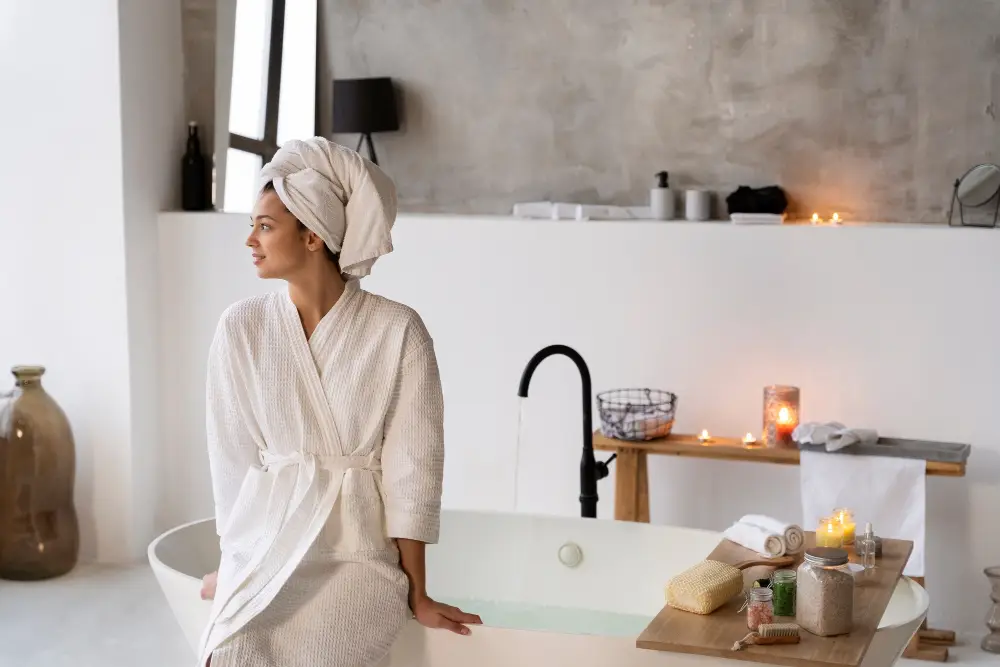
Spa Bathroom Trends for Weaverville Custom Homes
The bathroom in a luxury custom home in the Weaverville area has evolved considerably over the past decade, not in terms of its function, but in terms of what clients expect it to deliver as a space. The spa bathroom trends Weaverville homes are incorporating at the highest specification level reflect a shift in how primary bathrooms are programmed, designed, and built: less as a utilitarian room adjacent to the bedroom and more as a destination space whose design, material quality, and mechanical systems are governed by the same standard as every other room in the home.
That shift has practical implications for how these bathrooms are designed and built. A primary bathroom programmed with a steam shower, a freestanding soaking tub, radiant floor heating, and a custom millwork vanity is not a bathroom renovation or finish project, it is a construction project that involves structural loading assessment, mechanical system engineering, waterproofing specification, and custom fabrication that must be coordinated in the design phase before a single tile is selected or a wall is opened.
This guide covers the spa bathroom trends Weaverville custom homes are incorporating in 2026, what those trends require from a construction standpoint, and what clients should understand about how the most successful spa bathrooms at this level are designed and built.
Trend One: The Steam Shower as Primary Fixture
The steam shower has moved from a premium upgrade to a standard expectation in primary bathrooms at the luxury level in the Weaverville area. Clients commissioning custom homes in this region are specifying steam showers not as an add-on to a standard shower enclosure but as the primary shower fixture, the organizing element of the wet area around which the rest of the bathroom layout is developed.
What a properly designed steam shower at this level requires goes significantly beyond the installation of a steam generator and a glass enclosure. The enclosure must be fully sealed, no gaps at door seals, no unsealed penetrations through the waterproofing membrane, to contain the steam and prevent moisture from migrating into the wall assembly behind the tile. The ceiling must be sloped within the enclosure to direct condensation to the walls and drain rather than allowing it to drip on bathers. The ventilation system for the bathroom must be sized for the humidity output of a steam environment, which substantially exceeds the ventilation requirement of a standard shower.
The materials used within the steam enclosure must be appropriate for sustained exposure to high-temperature steam, not all natural stones perform consistently in this environment, and the grout and setting materials used for tile installation within a steam shower require specification appropriate to the thermal cycling the enclosure will experience. These are design and specification decisions that must be made in the design phase, not resolved by the tile installer on the day installation begins.
For custom homes in the Weaverville area where the primary bathroom is designed with a steam shower, Black Rabbit coordinates the mechanical rough-in, the waterproofing specification, the enclosure construction, and the tile installation as a single coordinated scope, which is the only approach that produces a steam shower that performs the way it was designed to perform over years of use.
Trend Two: Freestanding Soaking Tubs on Structural Floors
The freestanding soaking tub has become a defining element of spa bathroom trends Weaverville custom homes incorporate at the luxury specification level. Cast iron soaking tubs, stone resin tubs, and carved stone tubs, the fixture categories that appear most consistently in primary bathrooms at this level, share a characteristic that the bathroom floor system must be engineered for: they are heavy.
A cast iron soaking tub filled with water and occupied by two adults can weigh 800 to 1,000 pounds or more concentrated on four small contact points with the floor. A carved stone tub can weigh significantly more. Floor systems in residential construction, even well-built residential construction, are not automatically engineered for that point load, and a floor system that deflects under a freestanding tub creates a tile installation that cracks at the grout joints within years of installation, a drain connection that works loose, and in some cases a structural condition in the framing below that requires remediation.
For custom homes in the Weaverville area, freestanding tub selection is addressed in the design phase and the floor system is engineered for the specific fixture weight before framing begins. This is the sequence that prevents the floor performance problems that consistently appear in spa bathrooms where the tub was selected after the floor system was framed to standard residential specifications.
The placement of the freestanding tub within the bathroom, its relationship to the natural light from windows, its visual connection to mountain views where the site allows, and its position relative to the plumbing rough-in that supplies and drains it, is an architectural decision that significantly affects how the bathroom functions and how it presents. Tub placement is addressed in the design documentation before any rough-in work begins.
Trend Three: Natural Stone at Full Bathroom Scale
The application of natural stone, marble, quartzite, limestone, slate, and regional stone varieties, at the scale that spa bathroom trends Weaverville homes are incorporating in 2026 goes well beyond the accent use of stone that characterized luxury bathroom design a decade ago. Full-height stone wall cladding, book-matched stone panels in shower enclosures, monolithic stone vanity tops, and stone flooring carried continuously from the dry area through the wet area are all specifications that appear in primary bathroom designs at the current luxury level in the Weaverville area.
Natural stone at this scale introduces installation and performance requirements that the design and construction process must address specifically. Book-matched stone panels require careful sequencing of slab selection, fabrication, and installation to achieve the visual continuity the design intends. Large-format stone tiles require substrate flatness tolerances that exceed what standard drywall and tile backer installations achieve, the substrate must be prepared to a specific flatness standard before large-format stone installation begins. Stone flooring in the wet area requires a waterproofing and setting system appropriate to the weight and thermal movement characteristics of the specific stone being installed.
Material lead times for natural stone slabs and large-format panels, particularly for specialty stones sourced from specific quarries, must be built into the project schedule in the procurement phase. A primary bathroom design that specifies a particular quartzite slab for the shower walls and vanity top must have that material ordered and confirmed before the construction sequence reaches the tile installation phase. This is a procurement discipline that the design-build structure of Black Rabbit’s project management enforces as a matter of process.
Trend Four: Radiant Floor Heating as Standard Specification
Radiant floor heating has become a standard specification rather than a premium upgrade in primary bathrooms at the luxury level in the Weaverville area. In a climate where winter morning floor temperatures in a bathroom without radiant heat are a consistent quality-of-life issue, particularly at the elevations that many Weaverville-area custom homes occupy, the investment in radiant floor heating pays its return in daily use across the life of the home.
The two primary radiant floor heating systems specified in spa bathrooms at this level are electric resistance systems, thin heating mats installed beneath the tile setting bed, and hydronic systems that circulate heated water through tubing embedded in the floor assembly. Electric systems are simpler to install and appropriate for single-room applications. Hydronic systems are more efficient for larger areas and integrate with the home’s primary heating plant.
System selection, electrical capacity requirements, and thermostat integration are mechanical system decisions that must be coordinated in the design phase before rough-in begins. For custom homes in the Weaverville area where radiant floor heating is specified in the primary bathroom, the electrical service panel capacity and circuit allocation for the bathroom are addressed in the electrical design documentation before framing is complete.
Trend Five: Integrated Lighting Design
The lighting in a spa bathroom at the current luxury level in the Weaverville area is not an afterthought to the fixture and finish selections, it is a design element that is developed concurrently with the architectural layout and the material palette. The spa bathroom trends Weaverville custom homes are incorporating in this area reflect a layered approach to lighting that addresses ambient illumination, task lighting at the vanity, and architectural accent lighting as three distinct systems that are coordinated in the design documentation before electrical rough-in begins.
Recessed lighting in a bathroom with a tile ceiling or a plastered ceiling requires coordination between the lighting layout and the ceiling finish before either is installed. Vanity lighting that provides accurate color rendering for grooming tasks requires fixture selection governed by the color rendering index of the light source, not by its decorative appearance alone. Architectural accent lighting within a shower enclosure or beneath a freestanding tub requires waterproofing coordination appropriate to the wet zone designation of the fixture location.
These are decisions that must be made in the design phase and documented in the electrical and lighting design documents before rough-in begins. Bathrooms where lighting decisions are made after the ceiling is drywalled and the electrical rough-in is complete consistently require compromise, fixtures are placed where the rough-in allows rather than where the design requires.
Trend Six: Outdoor Connection & View Orientation
In the Weaverville area, where the natural setting of a private land parcel is frequently the defining quality of the property, spa bathroom trends increasingly incorporate direct visual or physical connection to the outdoors, a window positioned to frame a mountain view from the soaking tub, a private outdoor shower on a screened terrace adjacent to the primary bathroom, or a glass panel in the shower enclosure oriented to a view that the site provides.
These connections between the bathroom interior and the natural setting of the site require design decisions that are made at the site analysis and floor plan stage, not added to a completed bathroom design as an afterthought. The orientation of the primary bedroom suite on the site, the position and height of windows in the bathroom, and the relationship between indoor and outdoor spaces adjacent to the bathroom are all determined in the design phase, where the site conditions are known and the architectural response to them can be fully developed.
For clients building on private land in the Weaverville area where the natural setting is a primary motivation for the site selection, the bathroom’s relationship to that setting is a design consideration that belongs in the earliest phase of the architectural program, not in the finish specification phase where the structure is already framed and the opportunities for site connection are fixed by decisions already made.
What Spa Bathroom Construction Requires at This Level
The spa bathroom trends Weaverville custom homes are incorporating in 2026 share a common requirement: they must be designed and built as construction projects, not as interior decoration projects. The steam systems, the structural floor engineering, the waterproofing assemblies, the radiant systems, and the natural stone installations that define the current standard for luxury primary bathrooms all require design documentation, mechanical coordination, and construction execution that is managed by a team with full design-build accountability.
Black Rabbit Construction delivers primary bathroom design and construction in custom homes and renovation projects across the Weaverville area under a unified contract that holds one team accountable for the design intent and the construction execution. Discovery Phase consultations are available on a limited annual basis for clients whose project includes primary bathroom programming at the luxury level.
Localized Advice for Weaverville Custom Home Clients
The site conditions of a Weaverville-area custom home, the elevation, the natural light available from the site orientation, the views the parcel provides, should inform the primary bathroom design in ways that are specific to the project. A bathroom with a north-facing window at elevation receives different light than a south-facing room at valley grade. A bathroom positioned to capture a mountain view has a design opportunity that one oriented to a neighboring parcel does not.
These site-specific opportunities are identified in the design phase and developed into the bathroom architectural program before finish selections begin. Clients whose primary bathroom design is developed independently of the site conditions of the specific home consistently leave site-specific design opportunities on the table that could not be recovered after the structure is framed.
FAQ
Does the freestanding tub always require additional structural support?
Not always, but it requires structural assessment before the floor system is finalized. A cast iron tub at the lighter end of the weight range on a well-framed floor system may not require supplemental structure. A heavy stone tub on a floor system framed to standard residential specifications almost always does. The assessment is made in the design phase, before framing, where the addition of supplemental structure is straightforward rather than remedial.
What is the most common construction problem in spa bathroom installations?
Inadequate waterproofing behind tile in wet areas, particularly in steam shower enclosures where the moisture load on the wall assembly exceeds what standard tile backer and mortar bed installations are designed to manage. The waterproofing assembly in a steam shower is more demanding than in a standard shower, and it must be specified and installed accordingly.
Can spa bathroom features be incorporated into a renovation of an existing Weaverville home?
Yes. Steam showers, radiant floor heating, freestanding tubs, and natural stone installations are all incorporated into renovation projects as well as new construction. The renovation process begins with an existing conditions assessment that identifies the structural, mechanical, and spatial conditions the renovation scope must address before design begins.
How far in advance should specialty fixtures & stone materials be ordered for a spa bathroom project?
Lead times for specialty plumbing fixtures, custom steam generators, and natural stone slabs can range from six to twenty weeks depending on the specific product and the sourcing location. These lead times are identified in the design phase and incorporated into the procurement schedule so that materials are on-site when the construction sequence requires them.
Design the Bathroom the Site & the Home Deserve
The spa bathroom trends Weaverville homes are incorporating at the current luxury level require the same design discipline and construction accountability as every other element of a high-specification custom home. Black Rabbit Construction delivers that standard across every project it takes on and accepts a limited number of consultations each year.
Request Your Private Consultation → Start Your Discovery Phase → Discuss Your Project →